


You’re reading “Echoes in Time,” a weekly newsletter by the Independent Herald that focuses on stories of years gone by in order to paint a portrait of Scott County and its people. “Echoes in Time” is one of six weekly newsletters published by the IH. You can adjust your subscription settings to include as many or as few of these newsletters as you want. If you aren’t a subscriber, please consider doing so. It’s free!
Today’s newsletter is sponsored by the Scott County Chamber of Commerce. Since 1954, the Scott County Chamber of Commerce has advocated for a strong community by supporting stronger infrastructure and leadership.

Archibald Angel: Early settler of the Winfield area
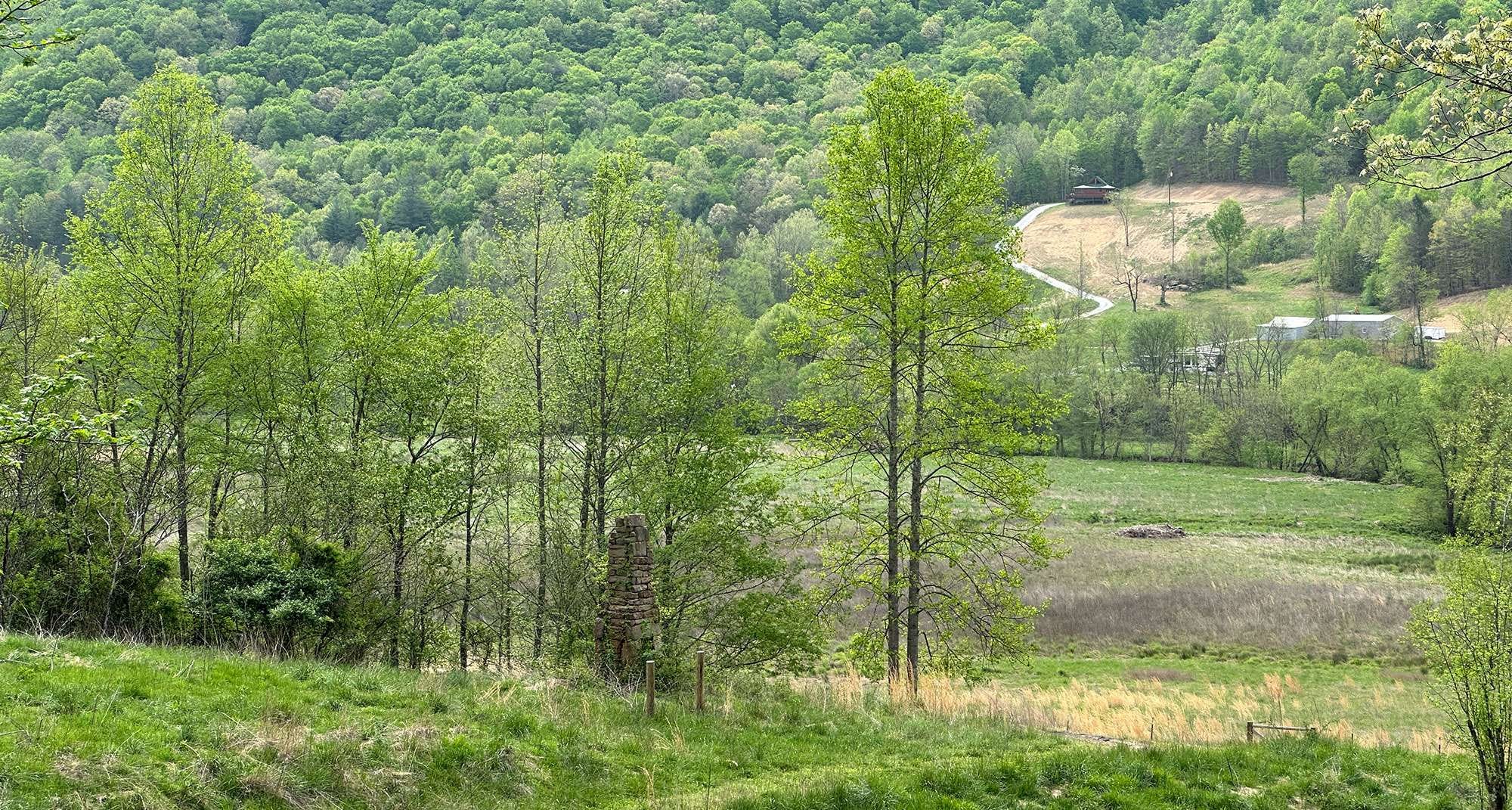
Archibald Andrew “Arch” Angel (1775-1847) was one of the first settlers of present-day Scott County, building his home in the Gum Fork area of Scott County east of Winfield.
Born around 1775 in North Carolina, Angel was the son of William Angel II (1752-1852) and Mary Rachel Godwin (1752-1841).
He was a second-generation American. His father, William Angel II, was born in Shropshire, England, and immigrated to the American colonies as a young man.
The Angel family was one of the Winfield area’s first families, along with the Chitwoods and the Trammells.
The Angels and the Trammells settled down in Winfield together, thanks to their marriage connection. Arch Angel married Nancy Ann Trammell. She was the daughter of Revolutionary War veteran Dennis Trammell and his wife, Elizabeth Brassfield.
Arch and Nancy Angel had at least six children: James Angel (born 1806), Thomas Angel (1814), Millie Angel (1816), Dennis Angel (1819), Nancy Ann Angel (1820), and Elizabeth Jane Angel (1824).
Nancy Trammell Angel died in 1829, and Arch married a second time to Charlotte Trammell in November 1832. She is believed to have been a niece of Nancy Trammell. They had at least five children together: Malinda Angel (1834), Lucinda Angel (1835), John Angel (1838), Mahulda Ann Angel (1841) and Helen Mary Angel (1843).
The move to Scott County
It is not known exactly when Arch Angel and his father-in-law, Dennis Trammell, arrived in the area that would become Scott County. However, this likely occurred sometime between 1807 and 1810.
There are various court records indicating that Dennis Trammell moved his family to Claiborne County by 1797, then to Knox County, Ky. by 1805. That was one year after the marriage of his daughter to Arch Angel, though it’s not clear exactly where they were married.
In February 1804, Col. Return Jonathan Meigs — a hero of the Revolutionary War who was serving as a Cherokee agent in East Tennessee — sent a letter naming Arch Angel and others as “intruders on Indian Lands on the West Side of the Cumberland Mountain.” The letter did not specify where Angel would have been living at the time, but mentions Little South Fork, Clear Fork, Mouth of Buffaloe, Poplar Creek, Tattersons Creek, Elk Ford, and the Cumberland River. Based on those locations, he was likely living in present-day Campbell County or southeastern Kentucky.
The reason for Meigs’ letter: the Cumberland Plateau was still considered Indian territory at the time. The Cherokee did not cede ownership of the lands to the United States until the Third Treaty of Tellico shortly thereafter. It was that treaty that opened the Cumberland Plateau to white settlement.
Meigs’ letter ordered all of those living on Indian lands to remove themselves and their property or be forcibly removed by the U.S. military.
Angel appeared — along with Trammell — on a tax list in Knox County, Ky. in 1807. By 1810, both of them had arrived in present-day Scott County. Survey records indicate that Angel owned 298 acres on Pine Creek, while Trammell owned 216 acres on Pine Creek. At that time, the entire Oneida area was considered Pine Creek. What isn’t clear is whether these large land holdings were located on Jellico Creek, or if the Angel and Trammell families pulled up stakes and moved to Jellico Creek later. Either way, their final destination was the Ketchen area between Gum Fork and Capachene. Their farm there came to be known as Angel Valley, and it remains one of the most picturesque farms in Scott County.
In 1826, James Trammell — Dennis’s son; Nancy Ann’s brother — died and was buried on a small knoll on the family farm at Angel Valley. The grave was located just a few steps from Arch and Nancy’s home. Angel-Wright Cemetery, as it came to be known, grew to contain more than 150 graves, although most of them are unidentifiable. While there may have been burials at the cemetery prior to 1826, James Trammell has the oldest identifiable original headstone in all of Scott County. (Abraham Goad, a Revolutionary War veteran, died at New River a decade earlier, in 1816. However, his original grave stone is unidentifiable; a modern military stone was placed many years later. Additionally, there is a broken stone in the Davis Cemetery off Alderville Road in Winfield that is dated 1812. However, a name is not included on the stone.
Arch Angel was a slave-owner. According to census records, he owned five slaves in 1830 and seven slaves in 1840.
Arch Angel died on July 14, 1847, at the age of about 72. He is believed to be buried at the Angel-Wright Cemetery, though an identifiable stone cannot be found to designate his grave. His first wife was also believed to be buried there.
Following Arch’s death, Charlotte remarried to Jacob Lefever (1785-1858). He was a 63-year-old widower. He was listed as the guardian for Charlotte’s three minor children, John, Hulda, and Helen, in 1853. When he died five years later, Charlotte did not remarry. She died sometime after 1880.
While the Trammell family would become one of the most prominent families in the Winfield area — along with the Chitwoods — the Angel family name slowly faded from the scene. However, their descendants live on. Three of Arch’s daughters married into the King family that became prominent in southern McCreary County. Millie, the oldest, married William “Billy” King II. Her younger sisters married brothers from the King family. The King family lived at Ketchen at the time, but would later move to McCreary County. Another daughter, Elizabeth, moved into the Sharp family and settled at Buffalo. Still another, Malinda, married into the Watters family and moved to Kentucky.
The Angel boys from Arch’s first marriage — James, Thomas and Dennis — all married, had children, and remained at Angel Valley. All are buried at Angel-Wright Cemetery on the old farm. Two of them — Dennis and Thomas — married into the same King family as their sisters.
Thomas Angel, the great-grandson of Arch and Nancy, was one of the last people to be buried at the cemetery on the old family farm when he died in 1924. His wife, Isabell King Angel, was buried there in 1943, after which the cemetery became inactive. Thomas and Isabell had 10 children — three sons and seven daughters. However, they drifted away from Angel Valley. Several moved “up north,” to the Midwest. A couple moved to the Somerset area. Another moved to McCreary County, and one to Oneida. Several died young and are buried in the family cemetery at Angel Valley — including 13-year-old Albert, who died of a brain hemorrhage in 1910, Martha Neal, who died in 1921 in her 30s, and Alford, who died in infancy.
Today, all that remains of the old Angel homeplace is a rock chimney that rises above the fields that are still cleared but no longer actively farmed. The bulk of the farm recently sold, and remains undeveloped. Other parts of the original farm are owned by the Braden family. The road along the edge of the old farm is still called Angel Valley Road, but most of the references to the original owners of this fertile valley along Jellico Creek have faded away.
Thank you for reading. Our next newsletters will be Threads of Life on Wednesday and The Weekender Thursday evening. Want to update your subscription to add or subtract these newsletters? Do so here. Need to subscribe? Enter your email address below!
◼️ Monday morning: The Daybreaker (news & the week ahead)
◼️ Tuesday: Echoes in Time (stories of our history)
◼️ Wednesday: Threads of Life (obituaries)
◼️ Thursday evening: The Weekender (news & the weekend)
◼️ Friday: Friday Features (beyond the news)
◼️ Sunday: Varsity (a weekly sports recap)