

Among Southern mayors, John Duncan was at the forefront of race relations in Civil Rights era
Plus: Finding her footing in the health care field, and commission candidate list grows


Good Monday morning! Welcome to a brand new week. This is The Daybreaker, the first of several newsletters that will be published this week by the Independent Herald. The Daybreaker (Monday) and The Weekender (Thursday evening) are our two news-first newsletters. We publish several other newsletters throughout the week, as well as our regular E-Edition on Thursday and our Varsity E-Edition on Sunday (during sports season). If you’d like to adjust your subscription to include (or exclude) this or any of our other newsletters, please do so here. If you need to subscribe, it’s as simple as entering your email address:
Open your account online — anytime, anywhere! First National Bank makes it easier than ever to bank with us. You can open an account online, from the comfort of your home or on the go. Start now. (Sponsored content.)

Among Southern mayors, John Duncan was at the forefront of race relations in Civil Rights era

John James Duncan Jr. may never have envisioned ushering in a new era of race relations when he threw down his hoe in a hot cornfield just outside Huntsville in the 1930s and declared he would one day be mayor of Knoxville. Given the demographics of Scott County in the 1920s and 1930s, he may not have even met a black man at that point in his life. But on this Martin Luther King Jr. Day, as America reflects on the advancement of civil rights, Duncan’s story reminds us that moral courage can emerge from the most unexpected places.
It probably seems strange to talk about the contributions of a white man on a day set aside to honor a black man. Maybe it is. But in a rural white community that might not understand the significance of Martin Luther King Jr. Day, the story of one of their own can help drive it home.
MLK Day is, first and foremost, about Dr. King’s extraordinary life, his vision, and his sacrifice in the struggle for racial justice. But King understood that the movement needed allies across racial lines. He knew real change would come when people of goodwill, regardless of background, chose to stand on the right side of history. John Duncan was one of those people. He didn’t march in Selma or stand on the steps of the Lincoln Memorial, but in his own city, at a critical moment, he made choices that prevented violence and advanced integration. His story reminds us that the civil rights movement was not just about the heroes we celebrate, but also about the thousands of smaller decisions made by people in power who chose justice over convenience and progress over prejudice.
Scott County in the 1930s, when John J. Duncan was a kid hoeing corn on a farm about where Scott Appalachian Industries is now in Huntsville, was as homogeneous as a place could be. The killing of a white supervisor by a transient black worker at the turn of the century led to warnings for black workers at the Robbins Brick Yard and other industries to leave the county, and most did. The historian Esther Sharp Sanderson wrote that there were signs along the highway at the north and south ends of the county warning black people to stay out.
This was the world John Duncan knew as a boy, one of 10 children born to Flem and Cassie Duncan, growing up in what would be considered bitter poverty today. His father was a Spanish-American War veteran. His mother was an educator. Young John Duncan spent his days doing what what farm boys did here: working the dirty, dreaming of something more.
According to his brother Joe Duncan, who later became a Knox County criminal court judge, John was working that corn field one sweltering day when he had enough. He threw down his hoe, turned to his brother, and announced he was going to Knoxville to get an education, become mayor, and go to Congress.
It must have seemed like pure fantasy. But Duncan won a $25 scholarship from Sears-Roebuck, hitchhiked to Knoxille with five dollars in his pocket, and enrolled at the University of Tennessee. His education was interrupted by World War II, during which he served in the Army’s Security and Intelligence Division. After the war, he earned his law degree and returned to Knoxville to practice law with Joe. When their first client paid a $100 fee in ten dollar bills, Duncan looked at the money and said, “This sure beats hoeing corn, doesn’t it, Joe?”
By 1959, Duncan had been elected mayor of Knoxville, replacing Jack Dance who had died in office. That’s when his upbringing in a place with almost no racial diversity would be put to test in ways he could not have imagined.
The early 1960s were a crucible for Southern cities. Birmingham, Selma, Montgomery, Little Rock and others became synonymous with violence, attack dogs, fire hoses, and hatred. Across the South, the push for integration met fierce and often brutal resistance. When black students from Knoxville College organized sit-ins in 1960 to protest segregation at downtown lunch counters, Knoxville stood at a crossroads.
Duncan could have followed the path of many other Southern mayors. He could have sided with those who wanted to preserve the old order. A 1958 poll had shown that 90% of white Knoxville residents strongly opposed desegregation. The political winds were not at his back.
Instead, this Scott County farm boy chose a different path. Duncan joined the Knoxville Chamber of Commerce to form a Good Will Committee. Rather than letting tensions escalate, he worked directly with protestors and businessmen to defuse what could have become an explosive situation. He encouraged downtown businesses to integrate their lunch counters voluntarily. By July 1960, most had done so.
It seems almost anticlimactic in its simplicity. No dogs, no fire hoses, no federal troops. Just a mayor who chose dialogue over confrontation, who recognized the moral imperative even when political expediency suggested otherwise.
Duncan’s early intervention is widely credited as one of the key reasons Knoxville avoided the widespread violence that plagued other Southern cities during this period. While Birmingham exploded, Knoxville transitioned peacefully. The success of his approach showed in the strong political support he received from the black community. In his 1963 reelection campaign, Duncan won the Mountain View precinct, the city’s largest black precinct, with 803 votes compared to 55 and 47 for his opponents. In precinct after precinct, he carried the black vote by overwhelming margins.
How does a man from Scott County, a place where he never encountered racial diversity growing up, develop the moral compass to do the right thing when it mattered most? Perhaps it was the poverty of his childhood that taught him about dignity and struggle. Perhaps it was the values his parents instilled. Perhaps it was simply an innate sense of fairness and decency that transcended his limited life experience.
Or perhaps that’s the point. Duncan’s story suggests that the capacity for moral leadership does not require prior experience with the communities we serve. It requires empathy, courage, and a willingness to do what’s right even when it’s difficult.
As we observe Martin Luther King Jr. Day, we naturally focus on the giants of the civil rights movement: King himself, John Lewis, Rosa Parks, and others who risked everything for equality. And rightly so. But we should also remember their unlikely allies: the Southern mayors, business leaders, and ordinary citizens who “chose the harder right over the easier wrong.”
John Duncan went on to serve in Congress from 1965 until his death in 1988, developing a reputation as a hardworking representative who focused on his constituents’ needs. His son Jimmy succeeded him in Congress and served for 30 years. His daughter Becky Duncan Massey represents Knoxville in the state senate. The federal building in downtown Knoxville bears his name, approved within hours of his death by a Democratic-controlled Congress, with Tennessee Senator Al Gore carrying the resolution in the Senate.
But perhaps his greatest legacy is the lesson that a boy from Huntsville, Tennessee, a place with almost no black residents, could stand at a crucial moment in history and choose justice over expediency, dialogue over violence, and progress over the status quo.
That family farm is long gone, and John Duncan’s grave is in the family cemetery overlooking what were once the cornfields he hoed on hot summer days. But the path he walked out of those fields did not just lead him to Knoxville and to Congress. It led him to a moment when he could help bend the arc of history a little more toward justice. On this Martin Luther King Jr. Day, that is worth remembering.
For a county that still has very little racial diversity, Scott County nevertheless produced a man who understood that civil rights were not just about the communities directly affected. They were about the kind of society we all wanted to live in. That is a legacy that transcends demographics and speaks to something deeper about character and courage.
As Dr. King himself said, “The time is always right to do what is right.” John Duncan, the farm boy from Huntsville who threw down his hoe and dared to dream bigger, proved that truth when Knoxville needed it most.

Need a good rate on your auto insurance? Contact your local State Farm agent, Roger Baldwin. (Sponsored content.)
Finding her footing in the health care field
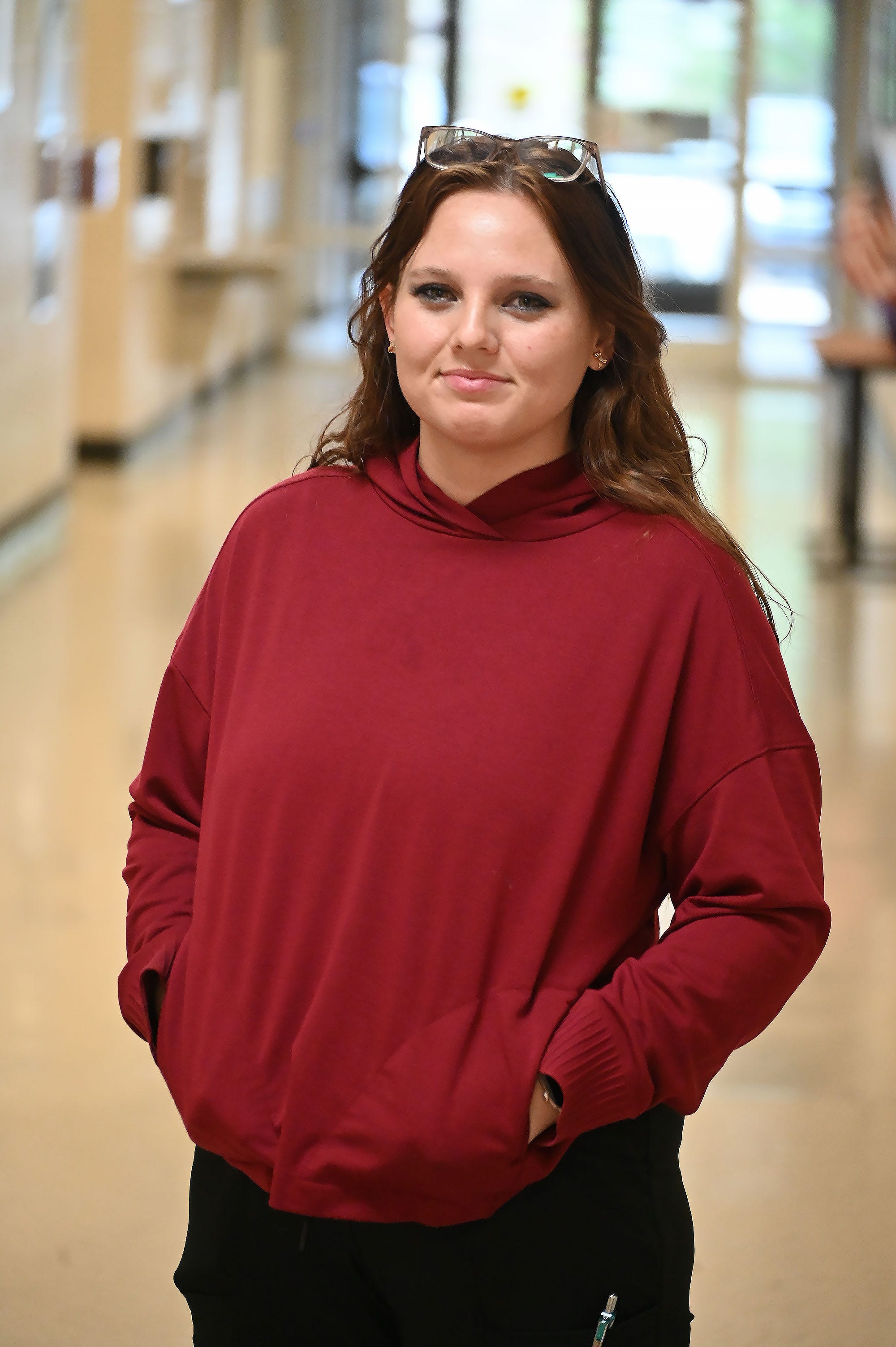
HUNTSVILLE | When Brittany Morrow decided to pursue a new career path, she knew it needed to meet two criteria: she wanted to work in the health care industry, and it needed to be something that would allow her to support her kids. As it turned out, TCAT Oneida/Huntsville’s brand-new Allied Health and Medical Assisting program, which launched in September, was a good fit.
Morrow is one of 20 students from the inaugural cohort of Allied Health students who will be pinned as medical assistants at a graduation ceremony next month. In addition to being a certified medical assistant, Morrow and her classmates will be certified as phlebotomists, EKG technicians and CNAs.
“I knew in general I wanted to go into health care,” Morrow said. “I also knew that I needed something practical. I have three very small kids, and I needed to earn enough money to support them while also choosing something doable when I was a single mom. Your kids are your number one priority. You have to be there for them first.”
The Allied Health program is unique in that it rolls together several supplemental programs that had previously been offered by TCAT — such as CNA, phlebotomy and EKG — and allows students to obtain all of those certifications in a single, six-month program. It’s a fast-paced program that quickly prepares students for the medical field by combining classroom, laboratory and clinical experiences.
From participating in the Scott County Chamber of Commerce Christmas Parade to throwing a baby shower for a classmate who is expecting his family’s first child, the past six months have seen Allied Health students come to know one another and grow close as a class.
“I have met a lot of different kinds of people through this program,” Morrow said. “Mrs. Sue (Sims, the instructor) has been a big part of it. It’s been really nice going from not having anybody to having somebody in my corner who cares about me. Mrs. Sue advocates for me, and that’s really nice.”
Morrow also said the staff at TCAT has been a big help.
“When I first applied for the program, I met Kristi Cornelius (dual enrollment coordinator), and she was an immediate help,” she said. “Janet (Watson, admissions lead), as soon as I met her, she started checking in on me. It’s crazy going from no one to meeting these random people who care about you and care about what’s going on in your life.”
As the first Allied Health class wraps up, some of the cohort will continue their education in TCAT’s Practical Nursing program. Others will enter the workforce. Morrow is one of the latter. She’s hoping for a job close to home, and ultimately wants to work in medical coding and billing.
Wherever her path lands her, Morrow said the time she has spent in the Allied Health program has been valuable.
“I’ve learned a lot – about health care and about myself,” she said. “I started feeling like I wasn’t helpless. I learned that I can dig myself out of my hole, that there’s an other side to the mountain I’ve been climbing.”
A new Allied Health and Medical Assisting class will start Feb. 26. To apply for admission, visit tcatoneida.edu. For more information about financial aid or any program offered by TCAT Oneida/Huntsville, call (423) 663-4900.
Two new candidates, potentially, for County Commission
Two more candidates picked up qualifying papers late last week to seek office on Scott County Commission.
Timber Rock Lodge owner Ralph Trieschmann, and educator and coach Torrey Slaven, who lost election by just one vote four years ago, both picked up paperwork as independent candidates. Trieschmann lives in the 5th District, and Slaven in the 6th District.
It appears there will potentially be a vacant seat in each of those districts. Incumbents Robyn McBroom in the 5th District and Shon Terry in the 6th District have not picked up qualifying papers, though a month remains in the qualifying period. Other challengers have also picked up paperwork in each district — Zach Strunk in the 5th and Jason Perry in the 6th. So have the other incumbents, Kelly Posey-Chitwood in the 5th and Colby Burke in the 6th.
The qualifying period ends Feb. 19.
The Growth Chart
This Monday (and every Monday), we’ll present The Growth Chart, a look at recent and ongoing growth throughout Scott County.
Mountain People’s Health Councils: Mountain People’s recently debuted its new, state-of-the-art diagnostic imaging center at its Oneida campus, located on Industrial Lane.
*Update* University of Tennessee Medical Clinic: University of Tennessee Medical Center has opened a new medical facility next-door to the Scott County Food Court in south Oneida that is currently accepting patients for University Midwives and UT Rheumatology Associates. According to Scott County Mayor Jerried Jeffers, cardiology and high-risk pregnancy will be added later.
Swan Hollow Brew Project: Oneida will soon have its second brewery. The father-and-son team of Jeff and Chris Swanson are planning Swan Hallow at 281 Underpass Drive in Oneida (former site of the Coffey Medical Center), according to the Scott County Chamber of Commerce. It will offer craft beer brewed on site, as well as food and entertainment. It will be Oneida’s second brewery. Big South Fork Brewing opened in the former First Trust & Savings Bank building on South Main Street earlier this year.
The Grizzly: The Grizzly is a locally-owned, dine-in restaurant located at 271 South Main Street in Oneida (former location of The Little Kitchen). It offers hand-cut steaks and hand-crafted burgers, among other items. The restaurant announced a limited menu on Dec. 7, one day after its soft opening after the annual Scott County Chamber of Commerce Christmas Parade.
Long John Silver’s: A Long John Silver’s fast food seafood restaurant will soon be constructed at Oneida Plaza, on the south side of McDonald’s. Scott County Mayor Jerried Jeffers announced earlier this month that Oneida Plaza owner Mendy Bohm has entered into an agreement with the company, and the targeted opening date is August 2026.
Zaxby’s: Zaxby’s, the fast food chicken restaurant chain, has purchased 1.3 acres of property on Alberta Street, just north of the Oneida Municipal Services Building, and is currently preparing it for the start of construction.
Casey’s: The Casey’s pizza and convenience store chain is currently constructing a store on Alberta Street in Oneida, located “on the corner” at the site of the former 4WD Performance.
Package Stores: The Town of Oneida began accepting applications for certificates of compliance for liquor stores in May, following November 2024 referendums approved by voters of both the town and the county. Two package stores have since been permitted and are slated to open in the coming months. Lisa Meadows announced on Facebook on Dec. 2 that applications for employment are currently being accepted at one of those stores, which will be located in Oneida Plaza. Huntsville, too, will soon have a package store.
Dollar General: Following a failed attempt to place a store near the intersection of Coopertown Road and Cooper Lake Road in Oneida, Dollar General is in the process of purchasing property for a store a little further west, at the intersection of Coopertown Road and Smith Road. Scott County Mayor Jerried Jeffers made that announcement at a County Commission meeting in November. This will be Dollar General’s fifth location in Scott County, joining stores in Oneida, Huntsville, Robbins and Winfield. And it may not be the last. DG is currently eyeing potential locations in other parts of Scott County, though it has not finalized anything.
TCAT: The Tennessee College of Applied Technology Oneida/Huntsville is adding two new buildings on its Oneida campus. The first, which will house the college’s diesel and power lineman programs, will open in January. The second, which will house earthmoving equipment operator, industrial maintenance, and several other programs, is slated to open late Spring 2026.
*Update* O&W Road: The O&W Road into the Big South Fork National River & Recreation Area is slated to re-open in mid-to-late February, following completion of a bridge over Pine Creek near the intersection with Toomey Road just outside the national park. Shortly thereafter, construction will begin on a new bridge overpassing the Norfolk-Southern Railroad on Niggs Creek Road in Oneida.
More to Come: There are several other businesses that are in the preliminary or planning stages, including some in Huntsville. No official announcements have yet been made, but could be forthcoming shortly.
The Week Ahead
☀️ Weather: The week will start off nice, with sunny but cold conditions. We’ll be near freezing for a high Monday and Tuesday, then warm into the mid 40s on Wednesday before a slight chance of rain and show showers returns to the forecast Wednesay night. Check out our daily Eye to the Sky updates on our Facebook page — published each morning at 7 a.m. on the dot — or always available at indherald.com.
—
📅 Community Calendar
Monday: The Scott Appalachian Industries Senior Center (Monticello Pike, Huntsville) offers a walking program, puzzles and games, and massage chairs every week day (Monday-Friday) from 8:30 a.m. to 2:30 p.m. However, the center will be closed Jan. 19 due to the MLK Day holiday.
Monday: Ridgeview Behavioral Health Services’ Mobile Health Clinic will be in the Walmart parking lot in Oneida from 9 a.m. to 3 p.m., offering integrated primary care and behavioral health. No insurance is not a problem. Call (866) 599-0466 for more information.
Monday: The Scott County Senior Citizens Center (Main Street, Oneida) will serve lunch from 11:30 a.m. until 1 p.m. The menu includes chili/chili dogs, cornbread and dessert. The cost is $7 for dine-in or carry-out. Phone: (423) 569-5972.
Monday: In high school sports, Oneida basketball will host Midway at 6 p.m.
Tuesday: The Scott County Senior Citizens Center (Main Street, Oneida) will host exercise from 10 a.m. until 11 a.m.
Tuesday: Pinnacle Resource Center’s food pantry (1513 Jeffers Road, Huntsville) will be open beginning at 10 a.m. There are no income guidelines; however, a photo ID and a piece of mail with a Scott County address are required.
Tuesday: The Scott Appalachian Industries Senior Center (Huntsville) will offer Bingo at 1 p.m.
Tuesday: The Robbins Elementary School Food Pantry will be open from 3 p.m. to 5 p.m. at Barton Chapel (5760 Scott Highway, Robbins). Turn onto Schoolhouse Road at Keeton Monuments and follow it past the school to the entrance of Barton Chapel (do not enter Barton Chapel from U.S. 27). Parents, grandparents, guardians or caregivers of students attending Robbins School or Head Start are eligible to receive food.
Tuesday: Scott County Commission will meet in regular session at the Scott County Office Building in Huntsville, beginning at 5 p.m.
Tuesday: Boy Scout Troop #333 will meet at the Oneida War Memorial Building on Alberta Street in Oneida beginning at 6 p.m.
Tuesday: In high school sports, Scott High basketball will host Union County at 6:30 p.m. The games will be broadcast live on the IH Sports Network. Oneida basketball will travel to Eagleton at 6 p.m.
Tuesday: Wall Builders will meet from 7 p.m. until 9 p.m. at Trinity Baptist Church (1611 Glass House Road, Helenwood) for those struggling with addiction or striving to keep off drugs. There will be preaching, teaching, food, fellowship and personal counseling.
Wednesday: The Scott County Senior Citizens Center (Main Street, Oneida) will serve lunch from 11:30 a.m. until 1 p.m. The menu includes white beans and ham, greens, beets, cornbread and dessert. The cost is $7 for dine-in or carry-out.
Thursday: The Gerry McDonald Mission House, located on Church Avenue, directly behind First United Methodist Church, is open from 9 a.m. to 12 p.m. You are eligible to receive food once per month. 569-8828.
Thursday: The Scott County Senior Citizens Center (Main Street, Oneida) will host exercise from 10 a.m. until 11 a.m.
Thursday: The Scott County Board of Education will meet in regular session at the Central Office in Huntsville, beginning at 4:30 p.m.
Thursday: The Round Table airs on the IH Sports Network, beginning at 6 p.m. at the C. Michael Lay Technology Center in Helenwood.
Friday: Scott High basketball travels to Anderson County at 6 p.m., and Oneida basketball travels to Coalfield at 6:30 p.m. Both games will be broadcast live on the IH Sports Network.
The Community Calendar is presented by Citizens Gas Utility District. Before you dig, Call 811! It’s the law! You can help prevent pipeline damage and leaks by calling 811 before doing any excavating or demolition and submitting a utility locate request.Visit citizensgastn.com.
Thank you for reading. Our next newsletter will be Echoes in Time tomorrow. If you’d like to update your subscription to add or subtract any of our newsletters, do so here. If you haven’t yet subscribed, it’s as simple as adding your email address!
◼️ Monday morning: The Daybreaker (news & the week ahead)
◼️ Tuesday: Echoes in Time (stories of our history)
◼️ Wednesday: Threads of Life (obituaries)
◼️ Thursday evening: The Weekender (news & the weekend)
◼️ Friday: Friday Features (beyond the news)
◼️ Sunday: Varsity (a weekly sports recap)