

Chickens of July: The murder of William N. Parrot
A tragedy in 1901 launched two very successful careers: A nationally-renowned shoe brand, and Oneida's chief architect, H.C. Cooper


You’re reading Friday Features, a weekly newsletter containing the Independent Herald’s feature stories — that is, stories that aren’t necessarily straight news but that provide an insightful look at our community and its people. If you’d like to adjust your subscription to include (or exclude) any of our newsletters, do so here. If you haven’t subscribed, please consider doing so!
Today’s newsletter is sponsored by First National Bank. Since 1904, First National Bank has been a part of Scott County. First National is local people — just like you. Visit fnboneida.com or call (423) 569-8586.

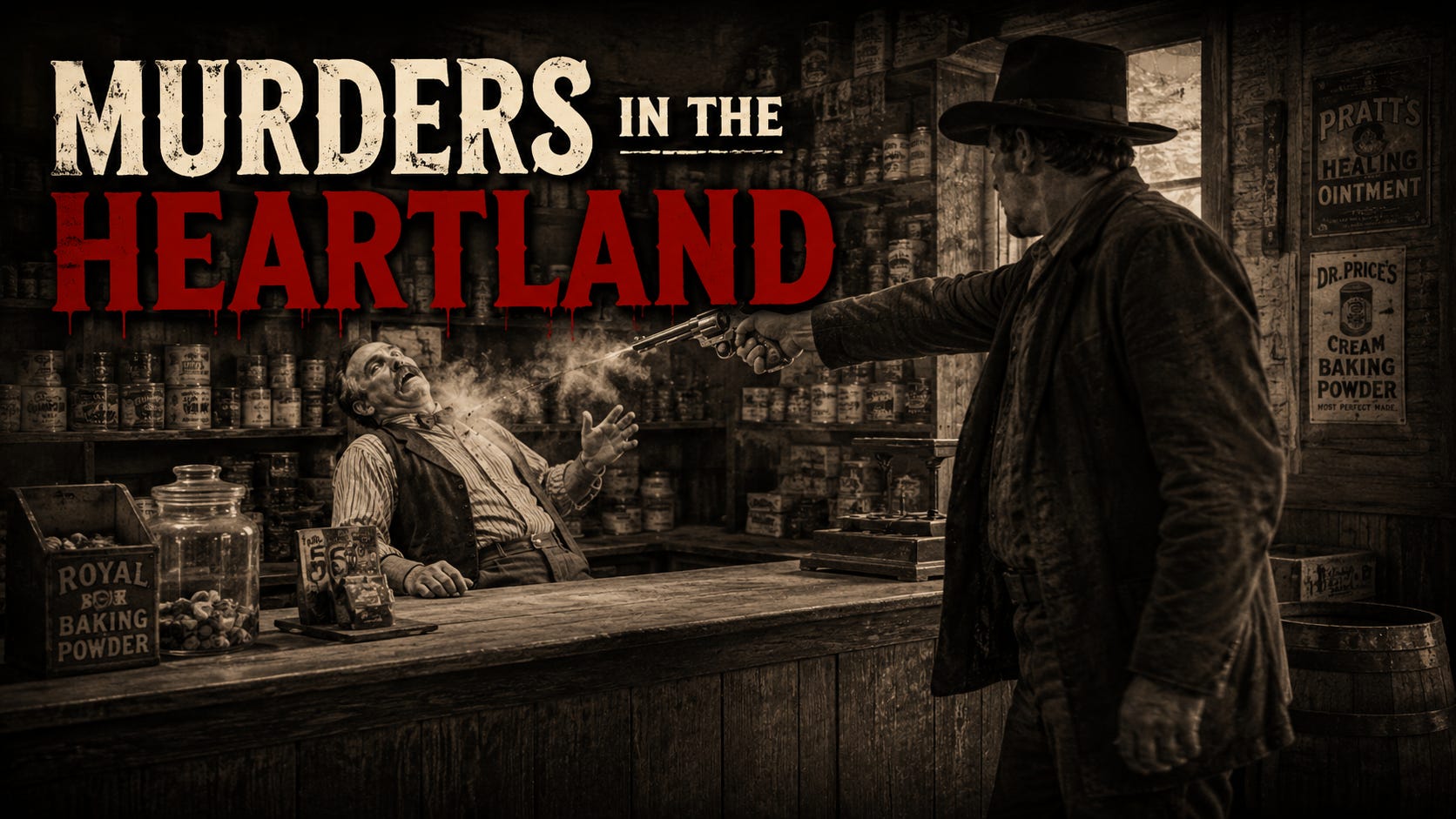
The chickens of July: The murder of William N. Parrot
Oneida, Tennessee — July 23, 1901
The heat that settled over Scott County in those first years of the twentieth century was not merely a matter of temperature. It was a living thing — thick and mean and patient — the kind of heat that made a man’s thoughts turn dark and small. Hollywood would later spin gold from the western territories, romanticize the dusty outlaws and wide-open spaces, but the men who lived through those days in the Tennessee mountains could have told you something the movies never would: the east could be just as wild. Life was cheap here. A man could lose it over apples (as Dick Hatfield would find out in the 1920s), and he could lose it over chickens.
William Nelson Parrott knew about chickens. He knew about most things that passed through Oneida, because most things passed through him. He owned The Oneida House — the town’s first motel, three stories tall, proud as a man could be in those days, with a restaurant inside and a general store below. He had come from Campbell County, the son of Ledford and Martha Parrott, and had moved to Scott County the way moths move toward light: following a woman. Her name was Lucy Katherine Byrd — folks called her Cassie — the daughter of Milton Asbury Byrd and Nancy Chitwood of Helenwood. They married in Roane County in 1896, and for a time, things were good.
Then came July 23, 1901. The heat had not broken for days.
***
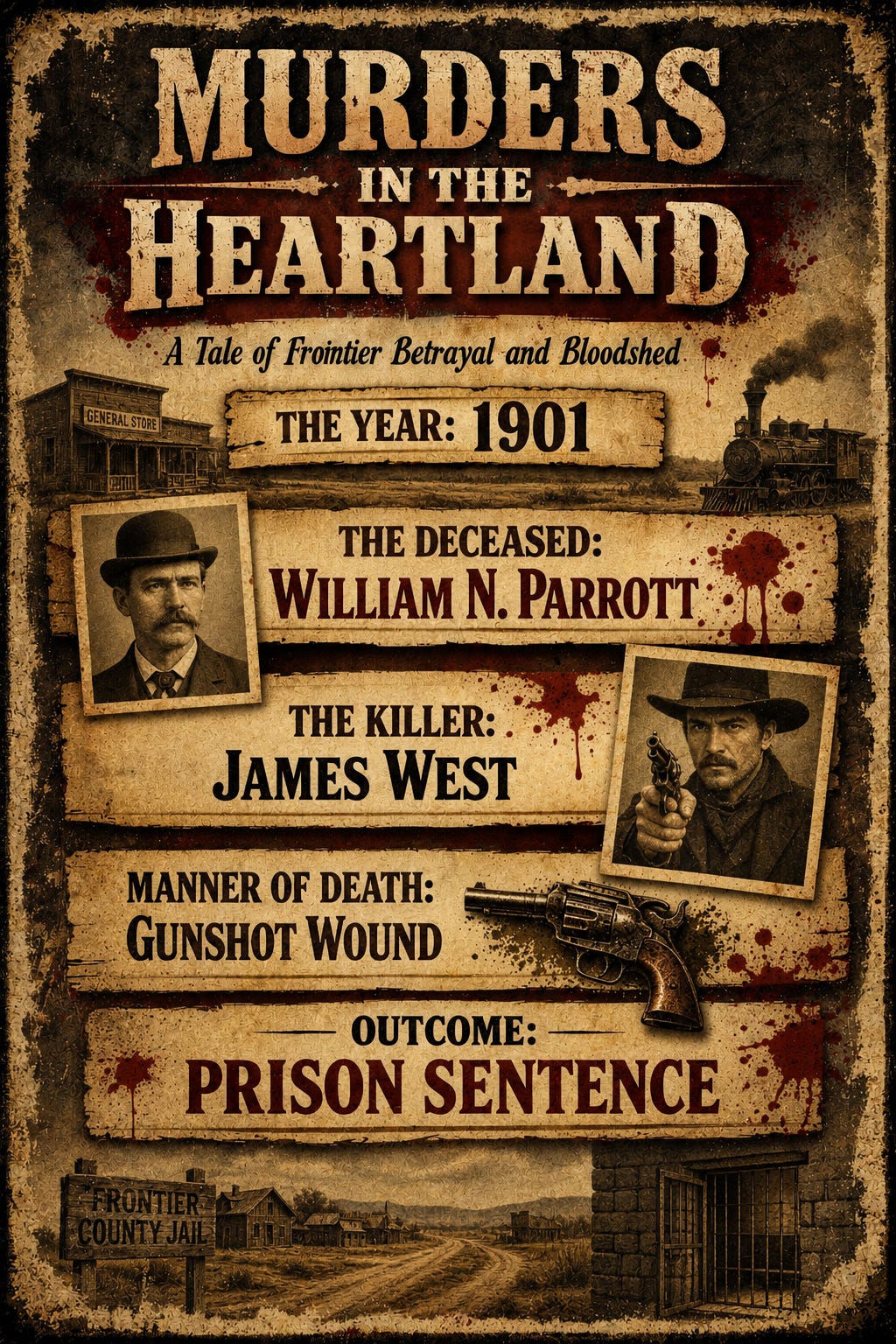
There were three of them walking down the street that afternoon. James West was 21 years old, single, the kind of young man the county produced like a cash crop: lean and proud and quick to feel an insult settle on him. With him walked Barney Litton and Alvin Jeffers, though their names would matter less than West’s before the day was done.
West had sold Parrott some chickens. That was the thing at the black root of it all: Chickens. The two men had agreed on a price, and Parrott had paid him. But, apparently, the matter wasn’t settled.
Parrott stepped out from behind his counter when he saw them coming. “Come in,” he said to West. “Come in. I don’t want to hurt you.”
It was an odd thing to say to a man you were merely going to argue with about poultry.
Inside the store, the argument opened like a wound. The chicken coop, Parrott said, had weighed eighteen pounds. Litton heard him say it. West heard him say it, too, and something behind West’s eyes went hard and flat.
“Don’t you call me a damn liar.”
That’s what Litton heard West say. The words hit the air between the two men like a stone dropped in still water. Then West’s hand moved toward his pocket.
Litton and Jeffers recognized the particular electricity of a moment about to go terribly wrong. They ran — toward the post office, toward help, toward anywhere that wasn’t inside that store. The postmaster, a man named M.E. Terry, heard the shot and felt his legs carry him toward it before his mind had fully formed the thought.
He found Parrott on the floor. Shot through the right temple. The Knoxville Sentinel would later call him “a man of excellent character and industry” who “enjoyed the esteem of all who knew him.” The floor of his own store had drunk his blood on a Tuesday afternoon in July.
A pistol lay near the dead man’s hand.
***
West said he’d acted in self-defense. He said Parrott had gone for his gun first, that the whole ugly business had been started by the dead man. At a bail hearing weeks later, he told the court that Parrott had accused him of lying about the chickens, that he’d called Parrott “a very vile name,” and that Parrott had reached for his weapon first.
It might have worked, except for the child.
A boy had been standing in the street, watching through the store window the way children do — fearless in their curiosity, present at moments they have no business witnessing. He told a different story. West had called Parrott a hard name, that much was true. And Parrott had taken offense, saying, “Don’t you call me any such name.” But then West had immediately drawn his gun and fired. Just like that. Simple as weather.
The prosecution, led by J.C. Parker — whose own son, Sam, would one day be murdered in Helenwood, as if violence were a debt that collected interest across generations — argued that West had planted the gun that was found by Parrott’s hand. Had Parrott been holding it when the bullet found him, Parker’s expert witness testified, his dead hand would have locked around it in a grip that death alone could give. The gun would not have been lying loose on the floor. It would have been locked in that final, terrible fist.
The defense tried to paint Parrott as a man given to argument, a dangerous character. The Chattanooga News recorded that they failed.
West was convicted of voluntary manslaughter. Five years. Five years for a man’s life, for a husband, for a father — proof enough, if proof were needed, that in 1901, in the hills of Scott County, the mathematics of death were calculated differently than we would calculate them now.
***
But here is where the story turns, where the darkness cracks and something unexpected comes struggling through.
Cassie Byrd Parrott buried her husband and sold The Oneida House. She could not stay. Some places become haunted not by ghosts but by memory, which is worse. The man who bought the business came from McCreary County, Ky. — a man named Eli Cooper, who brought with him his 13-year-old son, Horace Lafayette “H.F.” Cooper. Eli’s plan was modest: watch the store for a few days, find someone to manage it properly, move on. But young H.F. looked at the failing business the way a doctor looks at a sick patient. He diagnosed it, identified the “sore places,” and set about healing them. He made the store profitable in a year. He doubled the profit the next year. He doubled it again the year after that. H.F. Cooper grew into one of the most successful businessmen in Oneida’s history. Today, the community called Coopertown still carries his name.
And Cassie? She took her children and moved to Knoxville, where she remarried.
One of them was a boy named Paul. He was three years old the afternoon his father died. Three years old, which is old enough to see, old enough to feel the shape of a moment even if the mind can’t hold the words for it yet. He had been inside the store when his father died that hot July afternoon. He had watched it happen.
Paul Parrott grew up, the way children of tragedy sometimes do, into something remarkable. He opened a shoe store in Knoxville, and because he had his father’s sense of humor, beneath all that inherited sorrow, he kept a live parrot in the shop — a winking joke on his own last name. He began making children’s shoes. He called them Poll-Parrots. They grew and grew until they were everywhere, until the International Shoe Company bought them out, until Poll-Parrot shoes were what Air Jordans would one day become — the thing every child in America wanted on their feet. By 1929, the advertisements ran in papers coast to coast. A syndicated radio show followed: “The Cruise of the Poll Parrot.” And then, in the 1950s, Paul Parrott’s shoes became the title sponsor of “The Howdy Doody Show” on NBC, beaming into the living rooms of a nation that had no idea they were watching the legacy of a murder trial play out in thirty-minute increments.
***
Two men, H.F. Cooper and Paul Parrott. Two lives that grew enormous and good from a single act of terrible smallness — an argument about 18 pounds of chickens on a sweltering July afternoon, a gunshot, a boy left without a father.
Scott County was wild in those days. The West gets the movies, but the East had its own darkness, its own stories whispered over back fences and carried in blood from one generation to the next. A man could meet his end violently and unremarkably, and the newspapers would note it and move on, because there would be another killing soon enough.
But sometimes – not often, but sometimes – out of the worst thing, the seed of something that will outlast everyone involved gets planed in the dark soil of grief.
It happens that way. It really does.
Thank you for reading. Our next newsletter will be The Daybreaker bright and early Monday morning. If you’d like to update your subscription to add or subtract any of our newsletters, do so here. If you haven’t yet subscribed, it’s as simple as adding your email address!
◼️ About the IH • IH Sports Network • The Encyclopedia of Scott County
◼️ Subscribe • Sponsor • Manage Your Account
◼️ Follow us on Facebook, Instagram, X/Twitter, YouTube
Our Newsletters:
• Monday morning: The Daybreaker (news & the week ahead)
• Tuesday: Echoes from the Past (stories of our history)
• Wednesday: Threads of Life (obituaries)
• Thursday evening: The Weekender (news & the weekend)
• Friday: Friday Features (beyond the news)
• Sunday: Varsity (a weekly sports recap)