



You’re reading Friday Features, a weekly newsletter containing the Independent Herald’s feature stories — that is, stories that aren’t necessarily straight news but that provide an insightful look at our community and its people. If you’d like to adjust your subscription to include (or exclude) any of our newsletters, do so here. If you haven’t subscribed, please consider doing so!
Today’s newsletter is sponsored by First National Bank. Since 1904, First National Bank has been a part of Scott County. First National is local people — just like you. Visit fnboneida.com or call (423) 569-8586.

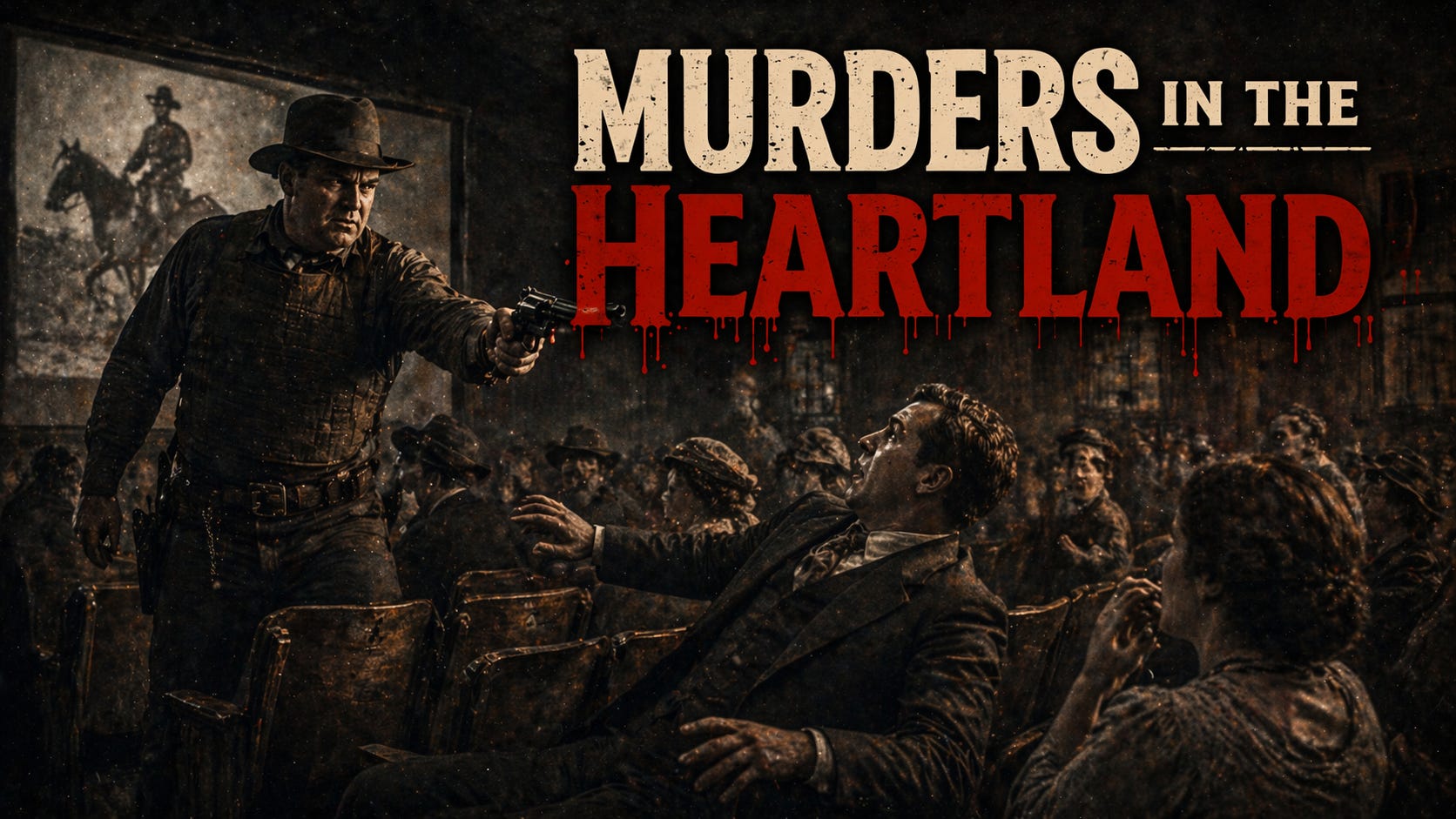
Deputy sheriff was first from Scott County to ‘ride the lightning’
Moonshiners were afraid of Ben Fowler. And for good reason.
He was a lawman carved of oak and iron — a big man, shoulders like a coal barge, and a stare that could blister paint. He didn’t just chase moonshiners through the thickets of Scott County; he hunted them. Crushed more than 200 stills in three years, folks said. Killed at least two men — maybe more, if you believed the whispers that moved like smoke through the hills. Seven bodies died by his hand, the rumors claimed. Fowler denied that last part, and he’d been cleared of wrongdoing in the only deaths officially linked to him.
He wore a bulletproof vest — steel plates stitched into canvas, homemade and heavy as sin — and he claimed it had saved his life more than once. His trademark look was the vest, a set of .44 pistols at his hips, and the glint of a man who had seen too much, drank too hard, and couldn’t quit either one.
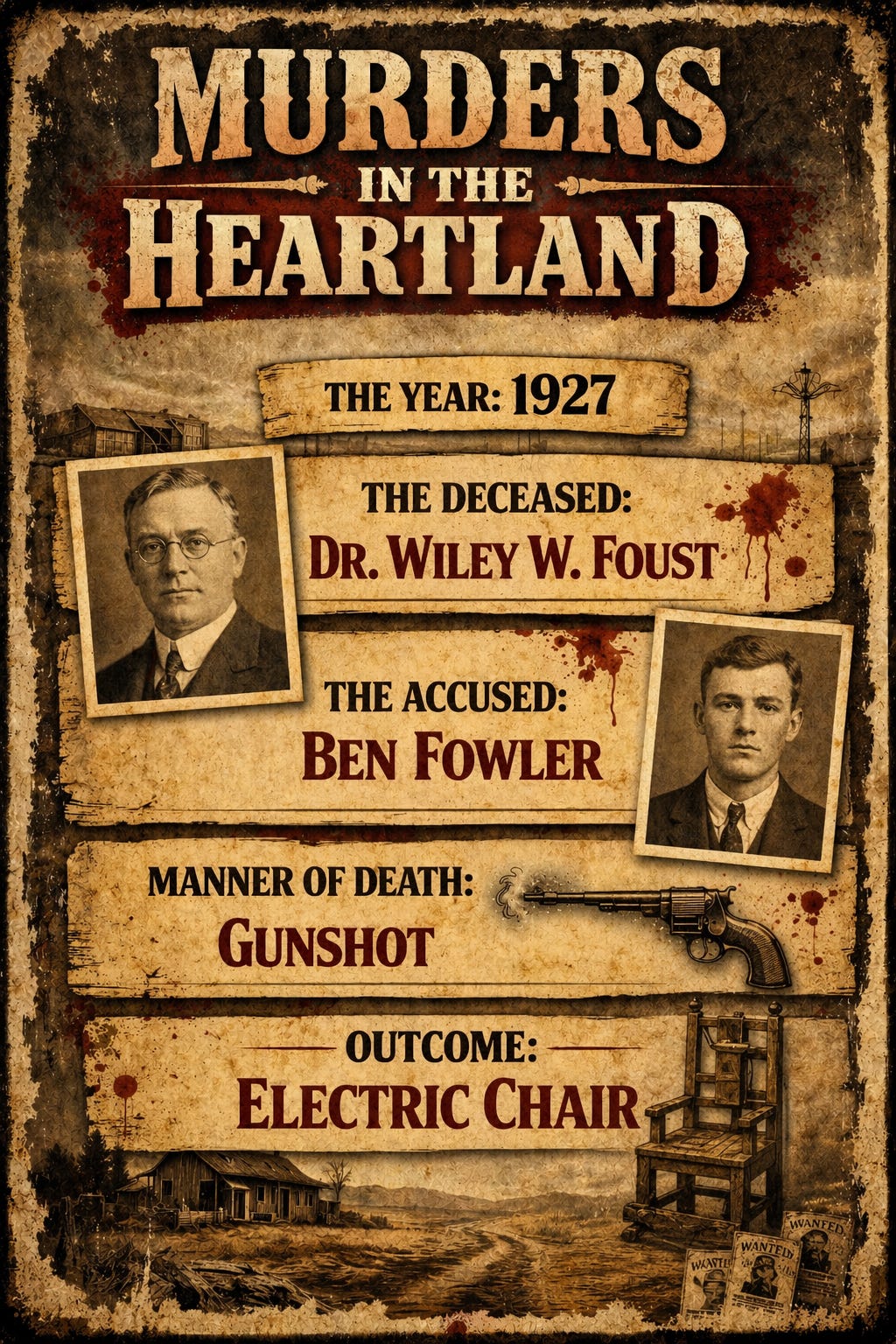
By the time March 5, 1927 rolled around, Ben Fowler was one of the most feared men in Scott County.
That Saturday night, he walked into the auditorium at the old Robbins High School to watch a motion picture. He was wearing the vest. The pistols. And, most notably, the whiskey.
People say he came in drunk, but no one could agree on just how drunk. That he was belligerent, nobody disputed. He was there to serve a warrant, or so he said. Maybe he was just there to show off — to remind everyone who was still king of the hill.
Fowler didn’t like noise, not unless it came from his own gun. So when some kids in the front row laughed too loud at the picture, he stormed down the aisle like a storm with a badge.
“You’ll hush or you’ll go to jail,” he barked.
That’s when Dr. Wiley W. Foust laughed. It wasn’t a big laugh, just enough to cut through the tension like a blade. He thought it was ridiculous — a grown man threatening to arrest children for laughing at a movie. It was ridiculous. But Ben Fowler didn’t like to be laughed at.
He turned to the doctor, face flushed, eyes wild.
“Big boy,” Fowler growled, “you will have to be quiet or I’ll get you, too.”
Foust didn’t back down. “Ben, you wouldn’t do that.”
But he would. And he did.
Fowler swung the butt of his pistol and struck the doctor in the head. As the crowd gasped and people began to rise from their seats, Fowler didn’t hesitate. He leveled one of his .44s and pulled the trigger five times.
Five bullets to the fae. Point blank. Dr. Foust never stood a chance.
Panic erupted. People dove for the floor, scrambled over benches, screamed into the smoky dark.
Another deputy, John Wesley West, had been seated in the crowd. He tried to stop Fowler, but he wound up being shot too — a bullet in the gut that would spell a slow, agonizing death. A bystander was also hit.
Dr. Foust’s wife, sitting just a few feet from her husband’s body, began to cry. Fowler demanded that someone shut her up.
Fowler didn’t flee. He didn’t hide. He stood there like he was untouchable, like the vest on his chest made him immortal.
But not everyone was afraid.
Dr. Foust’s adult son had been in the theater that night. When the first shots rang out, he drew his pistol and fired back. Five shots. Four hit the steel plate. The fifth punched into Fowler’s arm. The lawman staggered but didn’t fall.
The vest had saved him again. But this time, the end was already in motion.
Lawmen stormed the scene. Fowler was arrested on the spot, still half-drunk and bleeding from the arm. West was rushed to Howard-Henderson Hospital in Knoxville. He lasted two days before dying.
By Sunday morning, the news had already torn through Scott County like a brushfire in August. Dr. Foust was dead. Deputy West was dying. Ben Fowler — the iron-jawed still-buster who liked to consume liquor almost as much as he liked to confiscate it — had become the very monster he was supposed to protect the county from.
And the people wanted justice.
They didn’t waste time. By Monday — just two days after the shooting — a grand jury was convened in Huntsville and handed down an indictment for murder. The trial began three days after that. Justice in 1927 didn’t take long, especially when the defendant had killed a beloved doctor in front of dozens of witnesses.
Fowler’s defense? He was drunk. Too drunk to know what he was doing. He hadn’t meant to kill Deputy West — that was an accident.
But the court didn’t deal in mercy that week.
On March 14 — exactly seven days after his indictment — the jury took just two minutes to return a verdict. Guilty of murder. They recommended death.
The judge set the date: April 21. The sentence was death in the electric chair.
Fowler appealed, but the state Supreme Court upheld the verdict. Tennessee Governor Austin Peay granted a short stay of execution so Fowler’s parents could travel from Kentucky to see him one last time.
On the morning of Jan. 25, 1928, Ben Fowler walked calmly toward the electric chair. He comforted his grieving father.
“Now you go on, Pap, just like you’re going to the mill,” he said. “Tell Maw I’m just going on ahead, and I’ll be waiting when she gets there.”
He sat in the chair without resistance. Even offered tips on how to strap him in.
The switch was pulled. Ben Fowler — lawman, killer — was dead.
Fowler was 35 when he died. He became the first — and still the only — Scott Countian to be executed in the electric chair. The only other legal execution in the county’s history was Mike King, who was hanged in 1895 for killing a schoolteacher in Winfield.
Dr. Wiley Foust, age 54, was buried at Robbins Cemetery, just a short walk from where he died.
Deputy John Wesley West, 53, was laid to rest in Marcum Cemetery in Oneida. He left behind a widow, Tilitha Susanna King, and two sons — George and Fed — who lived out their lives in the quiet hills their father had sworn to protect.
Time passed. Names faded. But Scott Countians still tell the story of the night the law turned in on itself. Of whiskey and steel. Of the pistol smoke that lingered in the rafters long after the motion picture stopped.
And of a man in a bulletproof vest who finally couldn’t outrun the bullets.
Editor’s Note: This is the eleventh installment of Murders in the Heartland, the IH’s reimagined series covering particularly noteworthy murders that have been committed in Scott County through the years. In many instances, descendants of both the victims and the perpetrators still live in our community. The intent is not to reopen old wounds or to cast judgment, but to document past events that have an indelible impact on our community’s history. At the conclusion of the series, our book by the same name will be republished in a second, revised edition.
Thank you for reading. Our next newsletter will be The Daybreaker bright and early Monday morning. If you’d like to update your subscription to add or subtract any of our newsletters, do so here. If you haven’t yet subscribed, it’s as simple as adding your email address!
◼️ About the IH • IH Sports Network • The Encyclopedia of Scott County
◼️ Subscribe • Sponsor • Manage Your Account
◼️ Follow us on Facebook, Instagram, X/Twitter, YouTube
Our Newsletters:
• Monday morning: The Daybreaker (news & the week ahead)
• Tuesday: Echoes from the Past (stories of our history)
• Wednesday: Threads of Life (obituaries)
• Thursday evening: The Weekender (news & the weekend)
• Friday: Friday Features (beyond the news)
• Sunday: Varsity (a weekly sports recap)
JAMES WESLEY WEST (1873-1927)left behind many more family than just children...including his Father Green Berry West (1851–1937) & Mother Filana Philema Helen Marcum (1849–1935)
Spouse Telitha Susanna King (1881–1954) Married 1899
and Children
Ellana Mamie (1902–1976)
Nancy Jane (1904–1988)
Rilda Clementine (1907–1976)
Etheridge Walton (1910–1997)
Willard Woodrow (1912–1997)
Walter A Y (1917–2001)
George Oscar (1920–2006)
Fed Austin (1922–2012)
THANK YOU for this wonderful series.