



You’re reading Friday Features, a weekly newsletter containing the Independent Herald’s feature stories — that is, stories that aren’t necessarily straight news but that provide an insightful look at our community and its people. If you’d like to adjust your subscription to include (or exclude) any of our newsletters, do so here. If you haven’t subscribed, please consider doing so!
Today’s newsletter is sponsored by First National Bank. Since 1904, First National Bank has been a part of Scott County. First National is local people — just like you. Visit fnboneida.com or call (423) 569-8586.

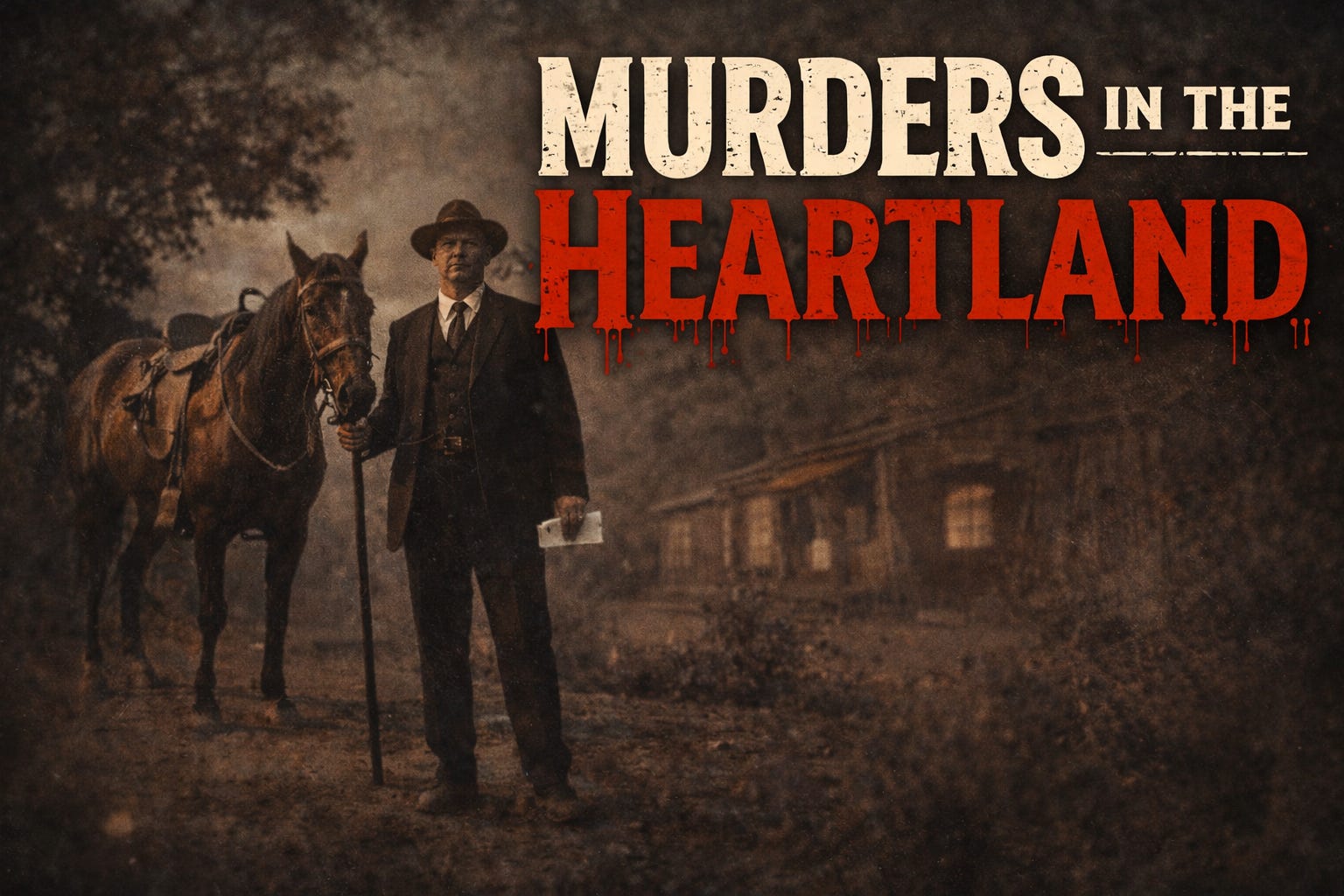
Huntsville, Tennessee – August 11, 1925
The first bullet didn’t make a sound.
It was the second one that echoed – the crack of it bouncing off the stone walls of the Scott County Jail, rolling past the courthouse like thunder on a dry summer day.
Sheriff Richard D. Ellis collapsed in front of the iron door, the keys still in his hand. Blood pooled beneath him on the courthouse steps. The prisoner beside him – George Foster, accused moonshiner – stood frozen, his eyes wide.
No one saw the shooter.
But everyone knew why Sheriff Ellis was dead.
In Scott County, Tennessee, during Prohibition, fighting moonshiners was about as safe as walking barefoot through a copperhead den. And Richard Ellis had made himself a target the moment he took the oath.
***
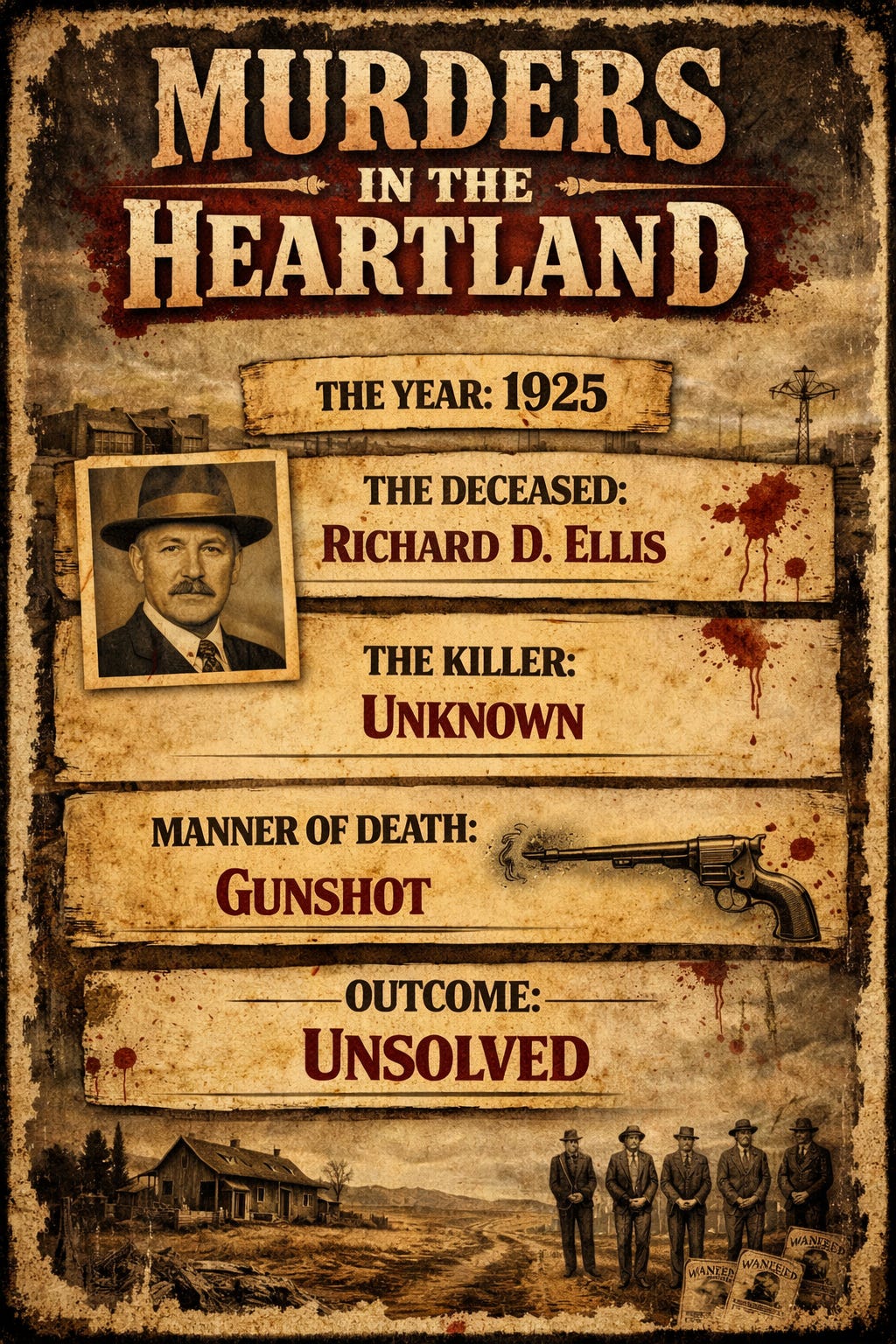
When R.D. Ellis ran for sheriff in 1920, he didn’t sugarcoat anything.
He was a Baptist preacher, just like his father before him. The kind who quoted scripture with his eyes locked on yours and didn’t flinch when he talked about hellfire. The kind who commanded a room just by standing in it. And he had one promise for Scott County: he was going to clean up the whiskey trade.
But Scott County didn’t just have moonshiners in the 1920s. It had generations of them. They were born into it, raised on it, fed on the fumes of copper kettles hidden deep in the hollers – places like No Business and Smokey Creek and dozens of dense, wild ridges where the law couldn’t reach even if it wanted to.
They called it a way of life.
He called it a sin.
And in 1920, sin was winning.
The hills were alive with the hiss of mash cooking and the sound of boot soles on wet leaves. The law could barely keep up. The National Park Service would later discover over a hundred and sixty still sites in the Big South Fork alone. If that number carried across the county, there were hundreds more.
Ellis didn’t care about the odds. He strapped on a badge, picked his deputies, and went to work.
But this war wasn’t fought with trumpets.
It was fought with guns.
***
On January 31, 1924, Sheriff Ellis’s crusade turned bloody.
He and his deputies were raiding a still just west of Oneida when they walked into an ambush. Gunfire erupted from the trees. Deputy Johnny Acres – the police chief in Oneida and Ellis’s closest ally – was shot through the chest. He dropped without a word, dead before he hit the ground.
Acres had just turned thirty-seven.
No one was ever charged.
When they buried John Acres that cold winter day at Marcum Cemetery, on a knoll overlooking the small town where he’d served as chief of police, Sheriff Ellis stood over the grave with his hat in his hand and his jaw clenched tight. He looked like a man who’d stared into something dark and found it staring back.
But Ellis didn’t flinch.
If anything, he dug in deeper.
That fall, Ellis teamed up with federal revenuers – men who’d made moonshine busts from Kentucky to Alabama. They carried rifles, not warrants. Among them was Col. Bob Smith, a grizzled agent out of Clinton who claimed he could sniff out a still just from the wind.
On November 6, 1924, they set their sights on Huntsville.
The target: Jerry Filmore Sexton, a young father with five small children, a reputation for a quick temper, and a still behind his home. Smith warned Ellis that Sexton might be trouble.
Ellis didn’t hesitate.
The raid turned into a bloodbath.
Gunfire erupted before the agents ever reached the still. Smith would later say he’d never heard shooting like it – not in the war, not in the backwoods, not anywhere. Bullets tore through brush and bark.
Sexton’s wife, Gertrude, was reportedly beside him the entire time, feeding cartridges into his rifle as fast as he could fire. A member of her family was shot and killed. Lee West was hit nine times but survived. Another man, Howard Griffith, was wounded.
Sexton himself was killed with a single round to the forehead.
The rest of the gang fled.
The hills went quiet again.
But they remembered.
And they waited.
***
August 11, 1925. A Tuesday. Bright sky overhead, not a cloud in sight.
Col. Bob Smith was back in town with a prisoner: George Foster, just another moonshiner picked up near Winona. Smith needed a place to hold him. Sheriff Ellis said he’d take him.
They met outside the jail. Ellis took custody of the prisoner, and they turned toward the door.
Then came the shot.
The preacher-turned-sheriff stumbled and fell. He was dead before Smith could turn around.
Foster didn’t run. He just stood there.
When the Knoxville News Sentinel asked Smith what happened, he just shrugged.
“Killing folks up in Scott County is just sort of a mountain pastime,” he said.
The newspaper didn’t hold back its coverage.
“The fellows up there get their biggest thrill out of killing officers,” it reported.
Maybe it was hyperbole. Maybe it wasn’t. But the facts were the facts.
In nineteen months, Scott County had lost its sheriff and its chief of police, both murdered in cold blood. Both killed while enforcing laws that a good chunk of the county didn’t give a damn about.
And there would be more.
Just over a year later, another officer – John Wesley West – would be gunned down.
Three lawmen in two years. No justice.
***
The hunt for Ellis’s killer began that same afternoon. They brought bloodhounds in from Dayton. The dogs picked up a scent and followed it across the wooded hills, through brush and briar, all the way to the edge of Paint Rock.
Then the trail went cold.
The case was never solved.
The bootleggers kept working the hills for a while longer, but the war eventually ended – not because anyone won, but because everyone got tired. Prohibition ended in 1933, and with it went most of the killing. The law turned its attention to other things. The hills got quieter.
But the questions never stopped.
Who pulled the trigger that morning in front of the jail? Was it revenge for the Sexton raid? A hired gun paid in corn liquor and resentment? Or just someone with a grudge and a rifle, waiting for the right moment?
The answers went to the grave with the men who were there – Ellis, Acres, Sexton, and the others who fought on the front lines of a war nobody really won.
The rest of the county moved on, because that’s what people do. They have to.
But some things don’t leave. Memory sticks around like the smell of sour mash in damp timber. History doesn’t really get buried. It just sits there under the surface, waiting.
Editor’s Note: This is the eighth installment of Murders in the Heartland, the IH’s reimagined series covering particularly noteworthy murders that have been committed in Scott County through the years. In many instances, descendants of both the victims and the perpetrators still live in our community. The intent is not to reopen old wounds or to cast judgment, but to document past events that have an indelible impact on our community’s history. At the conclusion of the series, our book by the same name will be republished in a second, revised edition.
Thank you for reading. Our next newsletter will be The Daybreaker bright and early Monday morning. If you’d like to update your subscription to add or subtract any of our newsletters, do so here. If you haven’t yet subscribed, it’s as simple as adding your email address!
◼️ About the IH • IH Sports Network • The Encyclopedia of Scott County
◼️ Subscribe • Sponsor • Manage Your Account
◼️ Follow us on Facebook, Instagram, X/Twitter, YouTube
Our Newsletters:
• Monday morning: The Daybreaker (news & the week ahead)
• Tuesday: Echoes from the Past (stories of our history)
• Wednesday: Threads of Life (obituaries)
• Thursday evening: The Weekender (news & the weekend)
• Friday: Friday Features (beyond the news)
• Sunday: Varsity (a weekly sports recap)