


You’re reading “Echoes in Time,” a weekly newsletter by the Independent Herald that focuses on stories of years gone by in order to paint a portrait of Scott County and its people. “Echoes in Time” is one of six weekly newsletters published by the IH. You can adjust your subscription settings to include as many or as few of these newsletters as you want. If you aren’t a subscriber, please consider doing so. It’s free!
Today’s newsletter is sponsored by the Scott County Chamber of Commerce. Since 1954, the Scott County Chamber of Commerce has advocated for a strong community by supporting stronger infrastructure and leadership.

The 1998 dynamic cooling snowstorm
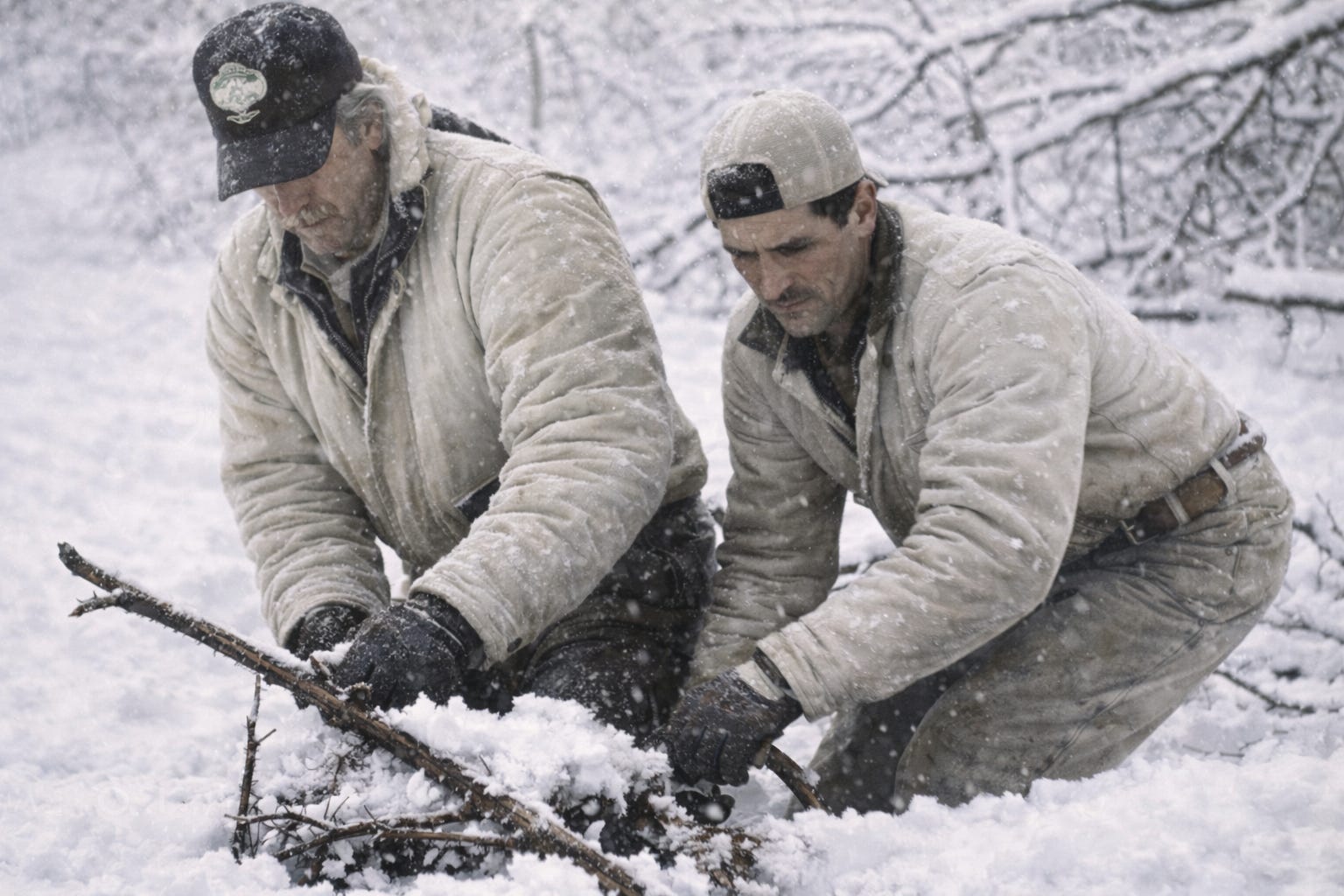
On Feb. 3 in 1998, snow started falling in Scott County. And it fell. And it fell. By the time it stopped late in the day on Feb. 4, it made even the Blizzard of ‘93 from five years earlier pale in comparison. It would go down as the most devastating winter storm in this community’s history. And absolutely nobody saw it coming.
A forecasting surprise
By the 1990s, the use of numerical computer models was widespread in meteorology, making weather forecasts more accurate than ever before. The massive Blizzard of ‘93 that occurred in March 1993 had been forecasted well in advance, with weathermen predicting significant snow days in advance, even though spring-like temperatures were in place with severe thunderstorms across the region. But in February 1998, some five years later, an even more impactful winter storm occurred that caught everyone off-guard.
A large, slow-moving storm system developed along the Gulf Coast and moved up the eastern seaboard. In addition to the storm’s slow movement, it pulled in moisture from the Atlantic Ocean — a rare source of moisture for storm systems that impact East Tennessee. The weather forecast for that Tuesday was rain. A cold rain, with temperatures in the 30s, but rain nevertheless. Rain might change to snow as it ended the next day, forecasters said, but little accumulation was expected. No watches, warnings, or advisories were issued by the National Weather Service.
When rain began to fall that Tuesday afternoon, the forecast appeared to be right on track. But almost immediately, the rain changed to snow. Not just any snow, but huge snow, with flakes the size of half-dollars. The snow fell heavily and furiously, beginning to accumulate almost immediately despite surface temperatures that were above freezing.
Even as snow was accumulating in Scott County, and in parts of Campbell and Morgan counties, meteorologists at Knoxville TV stations were forecasting rain on the 6 p.m. news that evening.
What happened? A meteorological phenomenon known as “dynamic cooling.” It occurs when a strengthening low pressure system has enough vertical motion to produce heavy precipitation. As the air rises, it cools within the atmosphere. This can cause rain to change over to wet snow as it falls through the atmosphere, even if temperatures are above 32°. The snowstorm impacted much of the Ohio Valley, including eastern Kentucky. But in Tennessee, only a small swath was impacted, which is why Knoxville meteorologists were still talking about rain as heavy snow fell. in most locations, outside Scott County, rain was falling.
By the time snow tapered off completely on Feb. 5, at least 18 inches had accumulated. Unfortunately, National Weather Service records for Oneida are missing for that time frame, so we don’t know exactly how much snow fell. However, it has been estimated in hindsight that as much as two feet of snow actually fell across Scott County, though the snow depth was never quite that significant due to melting and compaction. If records were available, it would go down as the largest snowfall in Scott County’s history.
In Louisville, Ky., 22 inches of snow fell and it is still regarded as the largest three-day snow total in that city’s history.
A devastating aftermath
Most folks who recall days-long power outages in the ‘90s mistakenly attribute them to the Blizzard of ‘93. In reality, Plateau Electric Cooperative crews — and outside agencies that traveled into Scott County to assist — restored power relatively quickly in the aftermath of the 1993 blizzard. The long-lived power outages actually occurred during the surprise snowstorm of 1998.
The weight of the heavy snow collapsed awning and caused widespread power outages. Loblolly pines that could not withstand the weight of the snow were especially impacted, collapsing power lines and blocking roads throughout the county. Residents reported hearing what sounded like gunshots when they stepped outside in the silence of the snowfall, as trees snapped under the weight of the snow. Trees continued to fall for many hours after the snow stopped. In some instances, workers used chainsaws to cut their way out from their home so they could go to work, then used saws to cut their way back home again because more trees had fallen in their absence.
On Wednesday, Feb. 4, Plateau Electric Cooperative reported that 14,400 homes and businesses in Scott and Morgan counties were without power. This dwarfed the number of power outages during the Blizzard of ‘93, when no more than 5% of PEC’s customers were without power at the same time. Thousands remained without power when the weekend arrived. On Tuesday, Feb. 11 — one week after the surprise snowstorm began — 444 homes and businesses remained without power, with the largest number of those being in the Brimstone area of southern Scott County.
Crews from Plateau Electric worked around the clock for more than a week to restore power, and were joined by utility crews from surrounding areas. As many as 150 workers combatted the outages in 16-hour and 18-hour shifts. It still stands as the worst power outage in PEC’s history.
The Scott County Sheriff’s Department, Scott County Rescue Squad, and other volunteer organizations responded to numerous emergency calls, including delivering food, oxygen, and medicine to stranded residents, as well as transporting sick residents to the hospital. In some cases, deputies were forced to walk to homes on foot because they could not reach them in four-wheel-drive vehicles due to fallen trees.
Every road in Scott County, including the major highways, were closed for a period of time by fallen trees. S.R. 297 through Paint Rock (now S.R. 456) was still closed on Monday, Feb. 9, nearly a week later — unthinkable by today’s standards. As roadds were reopened, they were usually limited to a single lane of traffic due to the fallen trees.
Ambulances had a difficult time responding to calls. The LifeCare Medical Transport of Helenwood reported that it took six hours to respond to an emergency call at Paint Rock, and 12 hours to respond to a call at Smith Creek.
The few people who ventured out in four-wheel-drive vehicles found that power outages were so widespread that gas stations and other businesses were unable to operate.
Hundreds of volunteers from across Scott County joined rescue and recovery efforts, providing manpower, four-wheel-drive and off-road vehicles, and equipment like chainsaws. The Tennessee Division of Forestry assisted the Scott County Road Department with clearing downed trees from roadways. The American Red Cross established an emergency shelter at Higher Life Assembly of God in Helenwood, which was later moved to the Huntsville Community Center to make hot showers and hot meals available to emergency workers in the field and residents who remained without power. The Tennessee National Guard was mobilized to assist the Scott County Sheriff’s Department as it responded to emergency calls.
Aftermath
Despite the devastating results, the 1998 Dynamic Cooling Storm isn’t well remembered — perhaps because it was not forecasted. By contrast, the Blizzard of ‘93 was forecasted days in advance and dominated the airwaves of regional and national news broadcasts.
With the passage of time, many Scott Countians conflict the Blizzard of ‘93 with the Dynamic Cooling Storm of ‘98. When residents recall being without power for days or weeks at a time, they usually remember it as the Blizzard of ‘93, when they’re actually remembering the 1998 storm. PEC reported in 1993 that no more than 5% of its customers were without power at any one time, and the longest power outage was 36 hours, in the Adams Hill area of Morgan County. By contrast, virtually everyone was without power for hours or days in the aftermath of the 1998 storm. Thousands were without power for at least five days, and hundreds were without power for more than a week.
Additionally, students returned to class soon after the Blizzard of ‘93, due to warm temperatures and quick melting. The blizzard began on Friday, March 12, and students in the Oneida Special School District were back in class by Wednesday, March 17. Following the 1998 snowstorm, on the other hand, schools were closed the remainder of the week of Tuesday, Feb. 3, and all of the next week, before finally reopening in the middle of February, after Valentines Day.
In 2026, more than a quarter of a century later, you can take a walk on exposed ridge tops with shallow soil in Scott County that were once dominated by loblolly and longleaf pines and find walking difficult due to deadfall that has not completely rotted away and the thickets of briars and brambles that resulted from the deforestation. This is largely due to the 1998 snowstorm, although the Southern Pine Beetle Infestation that followed in 1999 also played a role. In the Big South Fork National River & Recreation Area, roads entering the gorge area had been closed by the National Park Service but almost all roads outside the gorge area remained open. Most of those roads — originally used to access oil wells, for timber-cutting operations, and other purposes years before the national park was established — were closed by fallen trees during the ‘98 snowstorm and were never reopened.


Thank you for reading. Our next newsletter will be Threads of Life tomorrow. If you’d like to update your subscription to add or subtract any of our newsletters, do so here. If you haven’t yet subscribed, it’s as simple as adding your email address!
◼️ About the IH • IH Sports Network • The Encyclopedia of Scott County
◼️ Subscribe • Sponsor • Manage Your Account
◼️ Follow us on Facebook, Instagram, X/Twitter, YouTube
Our Newsletters:
• Monday morning: The Daybreaker (news & the week ahead)
• Tuesday: Echoes from the Past (stories of our history)
• Wednesday: Threads of Life (obituaries)
• Thursday evening: The Weekender (news & the weekend)
• Friday: Friday Features (beyond the news)
• Sunday: Varsity (a weekly sports recap)