



You’re reading Friday Features, a weekly newsletter containing the Independent Herald’s feature stories — that is, stories that aren’t necessarily straight news but that provide an insightful look at our community and its people. If you’d like to adjust your subscription to include (or exclude) any of our newsletters, do so here. If you haven’t subscribed, please consider doing so!
Today’s newsletter is sponsored by First National Bank. Since 1904, First National Bank has been a part of Scott County. First National is local people — just like you. Visit fnboneida.com or call (423) 569-8586.

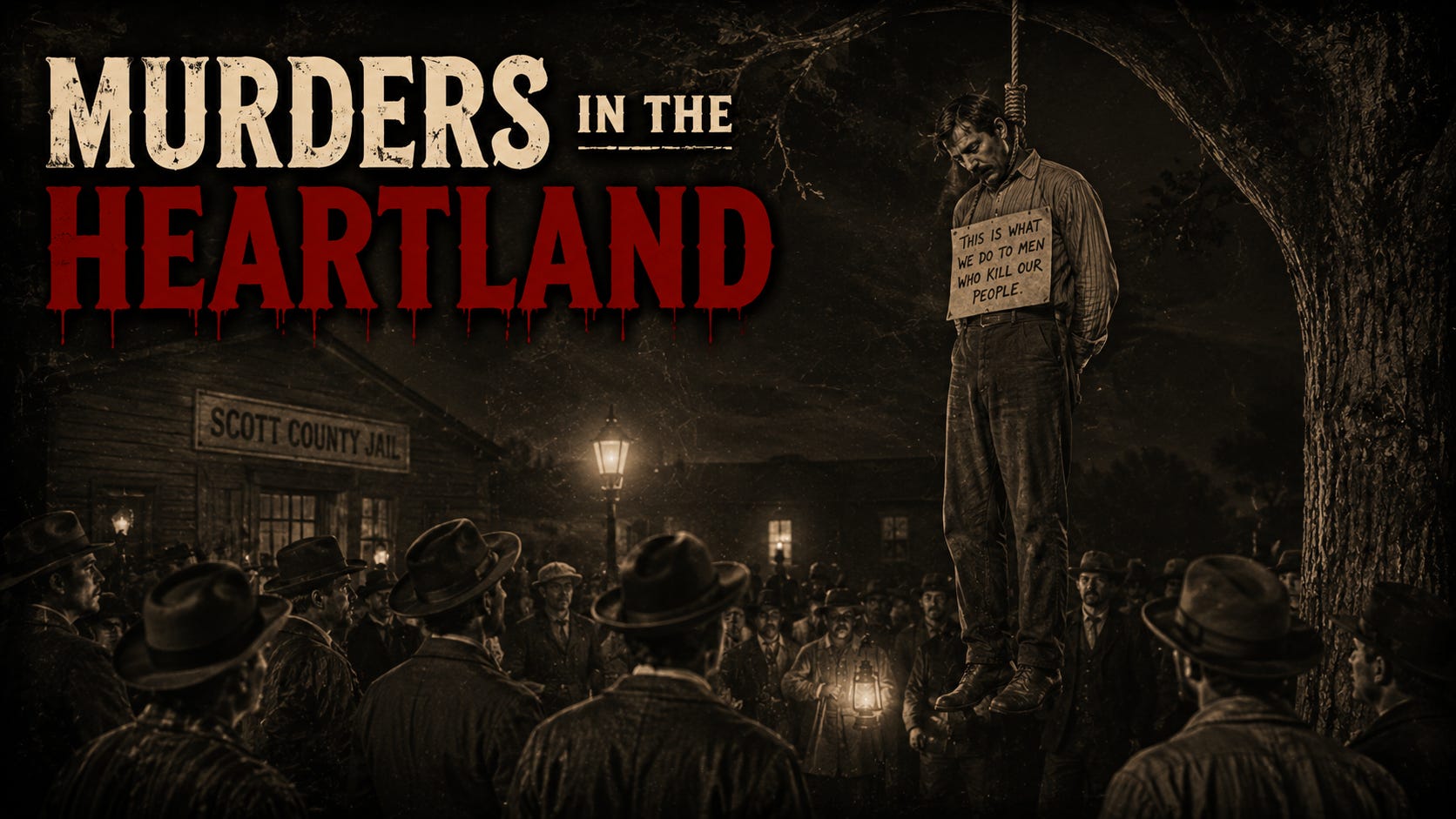
The night Campbell Countians marched over the mountains for one of Scott County’s own
“Excitement.”
That’s what the newspapers used to call it when somebody killed someone and the natives got a little restless. “Lots of excitement up in Scott County,” a newspaper in Knoxville or Chattanooga might say when a killing riled up a community eager to see the killer brought to justice.
Those days — the 1880s through the 1920s — were the days of “Judge Lynch’s law.” That’s also an old newspaper phrase. Papers would throw the terminology around casually as if hanging an accused — but not convicted — person from a tree was a spectator sport. The papers would even predict when an accused killer was about to fall victim to “the excitement,” like ESPN analysts might predict the outcome of a ballgame today.
“Judge Lynch,” of course, was a reference to lynching — a kind of rural, small-town justice where folks didn’t waste time waiting around for judges and juries to carry out their proceedings and took matters into their own hands, usually breaking into the jail to take a prisoner out of it, marching him to the closest available sturdy tree, and hoisting him up by the neck.
And in those days, nowhere in East Tennessee did it as well — or as often — as Scott County.
Seven times between 1880 and 1832, someone awaiting trial — presumed innocent by the U.S. Constitution; presumed guilty by the mob — was taken from the Scott County Jail at gunpoint and sent to their maker. Nowhere else in East Tennessee could the vigilantes claim so many notches in their belts.
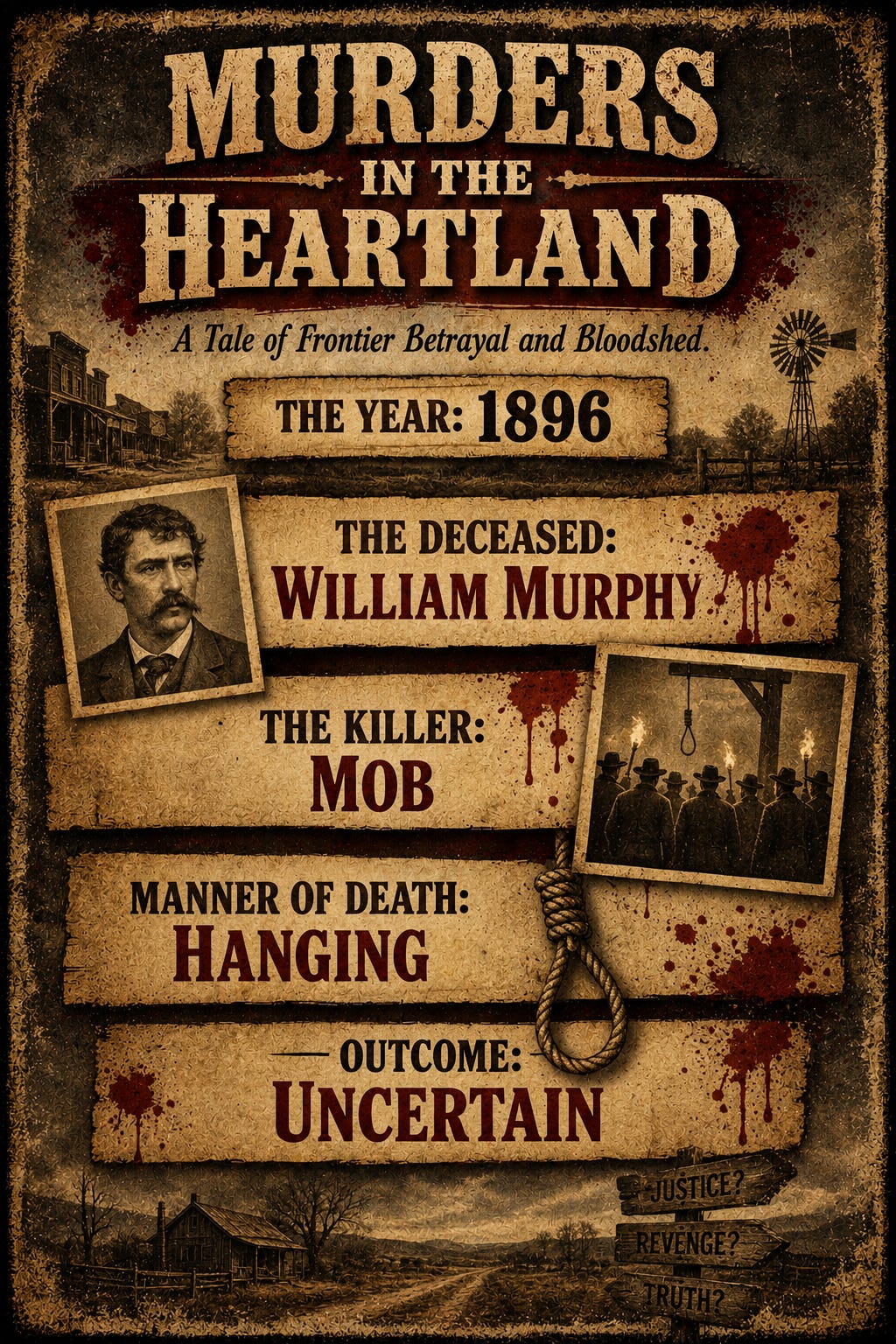
But in March 1896, the “excitement” that was roused in Scott County had nothing to do with the man doing the initial killing. Instead, folks were getting riled up because a mob had come across the mountains from Campbell County and lynched a Scott County man.
Yes, the Scott County man was accused of murder. Yes, Scott Countians had broken their own out of jail before and lynched him, and would again. But this was different. Sort of the same principle — much deadlier, of course — as “my brother and I can fight but don’t you dare pick on my brother.”
So when William Murphy was left dangling from a large tree less than a hundred yards from the jail, folks were riled up.
They were excited.
***
“It’s me — Joe Raynor; I’ve got a prisoner here.”
That’s what “Jailer Ellis” — we don’t know his first name because the newspapers didn’t concern themselves with his first name — heard in the middle of the night on Saturday, March 22, 1896.
We do know who Joe Raynor was. He was a deputy sheriff, who frequently herded prisoners to the jail in the middle of the night. Those were the days of moonshine liquor, bootlegging, and saloon brawls. There was always someone who needed arresting.
So Jailer Ellis thought little of it when Raynor announced himself with another prisoner. He simply opened the door. And found a gun barrel shoved in his face.
The guest wasn’t Raynor at all. It was a masked man, with plenty more masked men behind him. And he demanded the keys to the cell.
Jailer Ellis may have been outnumbered, but he wasn’t intimidated. “Not by a damn sight,” he said, and tried to close the door.
But the mob rushed him. As they did, his wife and daughter, eyes still matted with sleep, stumbled from their beds and discovered the masked men trying to overtake the jailer. His daughter grabbed the keys and threw them to the men.
William Murphy, the condemned man, pleaded for his life. “Oh, John,” he said, apparently recognizing someone in the mob, “don’t kill me; pray don’t let them kill me.”
He was an atheist, and an avowed disciple of Bob Ingersoll — at least that’s what the newspapers claimed, saying that “when he saw death staring him in the face, he prayed to God that his life might be saved, and promised to make amends for his misdeeds.”
When his prayers went unanswered and the noose was around his neck, Murphy was said to have pleaded that he be shot or stabbed or anything other than hanged.
But the rope was the preferred method of vigilante justice, and Murphy was left hanging from a locust tree just 80 yards from the jail, a note tacked to the foot of it warning passersby to not cut down the body until eight o’clock the following morning.
Judge Lynch had held court in Scott County once more.
***
It was three weeks earlier, in February 1896, that William Murphy had gunned down William Bowlin. Why? Who knows. The official accounts said that Bowlin was simply walking by Murphy’s house when he was shot. Murphy said there was an “old grudge” between the men, though his friends said they’d never known the two men to have a disagreement. Some said a woman might be involved. Others said Bowlin had information that would be harmful to Murphy’s reputation if it got out. The most likely reason appears to be that Bowlin had threatened to whip Murphy after accusing Murphy of making crude comments about his wife.
Either way, Murphy was arrested, denied bail, and placed in the county jail to await a trial that was scheduled for July.
But justice — that mountain sort of vengeance that passed for justice, at least — would not wait until the trees had greened and the corn was ripening.
Some newspapers placed the number of the men in the mob as high as 30. Others said the number was as few as 10. Tracks outside the jail indicated that they’d all headed back east on the Jacksboro Road — what is now S.R. 63 — leading Sheriff John Goad to conclude that they were from Campbell County. Someone inside the jail said the man Murphy had recognized as “John” was John Bowlin, brother of William Bowlin.
***
Jailer Ellis waited until the sun arose Sunday morning, as the mob’s note commanded, then cut down Murphy and carried his body into the jail. As word of the lynching spread, so did the anger — especially when folks figured out that the hanging had been committed by Campbell Countians. Before that Sunday was over, a group of men had gathered at the courthouse and drafted a resolution demanding that the governor offer a reward for the mob’s capture. It was signed by Sheriff Goad, County Judge W.H. Potter, and other leading men in Huntsville.
There had never been justice for a lynch mob in Scott County … and never would be again. But it was clear that this time was different. Not because anyone believed Murphy was innocent; he had confessed to killing Bill Bowlin. But, perhaps, because of the audacity of Campbell Countians to march into Scott County under the cover of darkness and kill one of Scott County’s own.
Before the week was out, Sheriff Goad — who had himself hanged a man a year earlier; but that was different, for Mike King had actually been convicted after killing a schoolteacher, and sentenced to death by a jury — had assembled a posse of two dozen men and set out for Campbell County. His mission: to bring those responsible for William Murphy’s hanging to justice.
The men divided up into groups. Some went north and picked up brothers John and Elijah Terry. Another went to Pioneer and picked up S.R. Pickering, William Brown, Riley Taylor, Francis Shoemaker, Andrew McClure, James Woods, and Joseph Day, with a promise of more arrests to follow.
Turns out, the “John” that William Murphy had pleaded with minutes before his death wasn’t a brother to Bill Bowlin at all, but a friend. His brother, Elijah, was released for lack of evidence, but John was bound over to court and hauled off to jail. A newspaper wrote that he “begged piteously” not to be placed in the cell that Murphy had occupied.
And the excitement flared again. The Chattanooga Daily Times wrote on March 28, 1896, that there was “great excitement” in Pioneer and at the Terry settlement north of there. That’s the way it was in the mountains, where an eye-for-an-eye and a tooth-for-a-tooth meant just that, and there was always a killing or some other misdeed waiting to be avenged.
And vengeance always seemed to turn up, whether from a hangman’s noose or the end of a gun barrel.
A year after William Murphy was lynched, in the spring of 1897, a Scott County man named Elswick Hughett started telling tales about a Campbell County justice of the peace — William Claxton — being a part of the Murphy lynch mob. So Claxton shot Hughett, killed him from ambush near the Rock House community east of Huntsville.
Two months after that, at the first of June 1897, Claxton was gunned down at the foot of Braden Mountain, located at the head of Rock House Creek.
Excitement raged again. Although the official word was that Claxton had been “shot by some unknown party,” everyone was sure enough of who it was that a newspaper a hundred miles away reported that Elswick’s brother, Henry Hughett, was the man who pulled the trigger.
The bodies were piling up now.
And on June 2, 1897, the Chattanooga Daily Times ominously predicted: “More murders may follow.”
That’s just the way it was in the mountains, where vengeance seeped out of the ravines like spring water from the ground.
Editor’s Note: Henry Hughett and another man, Mike Allen, were arrested by Sheriff John Goad and charged with William Claxton’s murder. However, the charges were dismissed due to insufficient evidence. Elswick Hughett (about 34 at the time of his death) and Henry Hughett were the sons of Delitha Hughett of Buffalo.
Thank you for reading. Our next newsletter will be The Daybreaker bright and early Monday morning. If you’d like to update your subscription to add or subtract any of our newsletters, do so here. If you haven’t yet subscribed, it’s as simple as adding your email address!
◼️ About the IH • IH Sports Network • The Encyclopedia of Scott County
◼️ Subscribe • Sponsor • Manage Your Account
◼️ Follow us on Facebook, Instagram, X/Twitter, YouTube
Our Newsletters:
• Monday morning: The Daybreaker (news & the week ahead)
• Tuesday: Echoes from the Past (stories of our history)
• Wednesday: Threads of Life (obituaries)
• Thursday evening: The Weekender (news & the weekend)
• Friday: Friday Features (beyond the news)
• Sunday: Varsity (a weekly sports recap)