


You’re reading “Echoes in Time,” a weekly newsletter by the Independent Herald that focuses on stories of years gone by in order to paint a portrait of Scott County and its people. “Echoes in Time” is one of six weekly newsletters published by the IH. You can adjust your subscription settings to include as many or as few of these newsletters as you want. If you aren’t a subscriber, please consider doing so. It’s free!
Today’s newsletter is sponsored by the Scott County Chamber of Commerce. Since 1954, the Scott County Chamber of Commerce has advocated for a strong community by supporting stronger infrastructure and leadership.

Glenmary is an unincorporated community in southern Scott County, the southernmost community along the U.S. Highway 27 corridor in Scott County. It was once a bustling coal-mining town along the Southern Railroad in the late 19th century and early 20th century. In fact, it was once Scott County’s largest town.
Geography
Glenmary is located along Davis Creek in southern Scott County, near where it empties into Black Wolf Creek. The name “Glenmary” was used to describe the entire settlement south of Elgin along Black Wolf Creek and its tributaries, including the Coal Hill and Campground areas.
The hills to the east of the U.S. Highway 27 corridor were once rich with seams of coal, which led to the fledgling coal and coke industry here in the late 1800s. This is what led to the area being known as “Coal Hill.” To the west of the U.S. 27 corridor, the fertile bottomlands around Black Wolf Creek (today, Nydeck Road) were highly-desired farmlands.
Today, Glenmary is an unincorporated community that is little more than a nameplace on maps, and is considered part of the larger, unincorporated community of Robbins.
Commerce and Business
There are no businesses in the Glenmary community today.
Historically, business activities at Glenmary centered around the coal and coke industry, as well as the timber industry. This began in the 1880s, after the construction of the Cincinnati & Southern Railroad opened Scott County’s natural resources reserves to outside exploration.
The Crooke Coal Company began in 1880. The Glenmary Coal & Coke Company was established in 1884, and the first lumber mill was the Tennessee Coal & Lumber Company. It was used to process poplar, pine, and hemlock.
In 1906, the lumber mill was transformed into a hardwood flooring mill.
At the peak of business activity in Glenmary, a new railroad was proposed that would connect the Southern Railroad to the city of Jamestown west of Glenmary. The route would have roughly followed present-day Nydeck Road. The railroad was never constructed. The lumber company eventually moved to Verdun near Hazel Valley, outside Oneida, and the Oneida & Western Railroadwas instead constructed.
At the peak of the coal and lumber era in Glenmary, there were 400 people living in the town, and many more living at Coal Hill, where the mining industry was centered. The lumber company built workers’ houses on what became known as Red Hill, just west of U.S. Highway 27. There was a separate housing project located on Nydeck Road.
As for the town, an assortment of stores, saloons and boarding houses were located along Davis Creek, near the Glenmary railroad depot.
Post Offices
The first post office at Glenmary opened in 1875 and was called Black Wolf. It was located to the north of where the town would eventually be located, between Glenmary and Elgin. The first postmaster was Newell H. Goff.
In June 1878, the Redmond (Redman) Post Office opened at Glenmary. It was named for its first postmaster, James R.T. Redman. The name changed to Glenmary in May 1880. The post office continued in operation until February 1972, when it closed and moved to Robbins. The last postmaster was Bobby Lee Burton.
The Black Wolf Post Office closed in 1898. The last postmaster was James C. Hamby.
Schools
According to Maggie Barger’s history of Glenmary, which was published by the FNB Chronicle in 1989, the first school at Glenmary was also used by the community’s Baptist church. Later, a secondary academy was chartered at Glenmary in the early 1880s. A “colored school” was open from 1894 to 1908.
After the Glenmary Presbyterian Church was built in 1907, it founded a private school. That same year, a school was built at Halfway, which was located between Glenmary and Coal Hill.
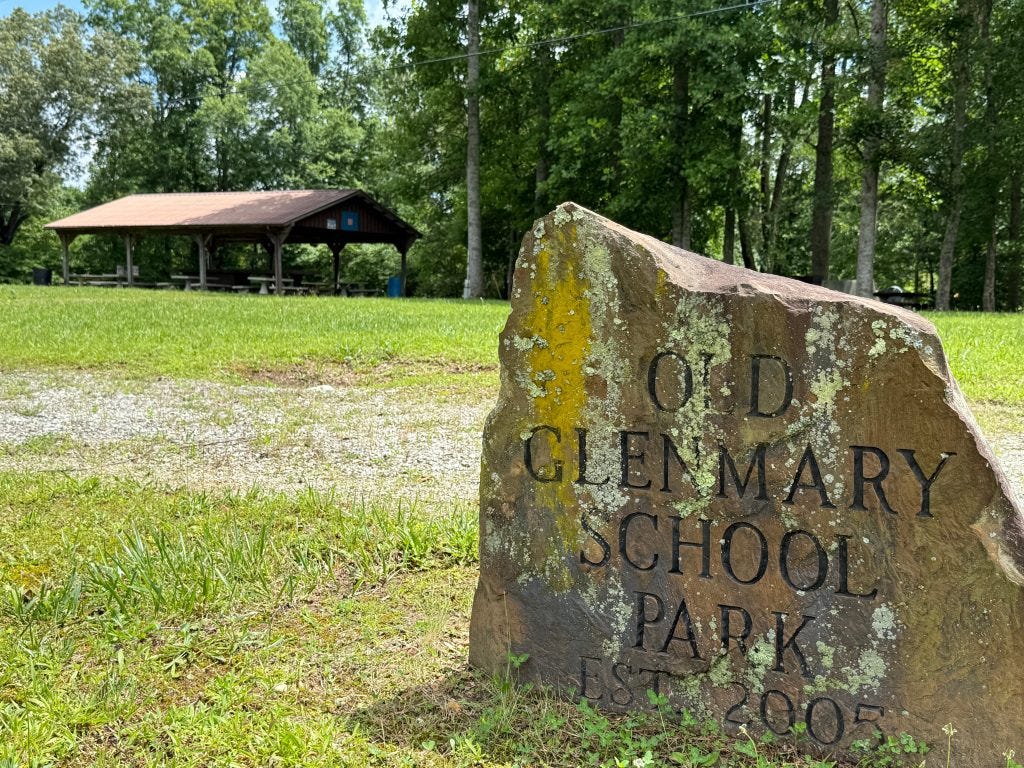
In 1922, the town’s last school was built on the hill to the west of U.S. 27, adjacent to Red Hill. It was a four-room school that was used until the 1960s, when it was consolidated with Robbins. The area where the school once stood is a privately-maintained park known as the Glenmary School Park.
Origins
In its earliest days, before it was known as Glenmary, this community was part of Morgan County. It was not until 1849 that Scott County was established by the Tennessee General Assembly, and the areas of Glenmary, Coal Hill, and Campground became part of Scott County.
By that time, several families lived in the greater Glenmary area, such as the Lewallen family that included Scott County’s first sheriff, John Lewallen.
Glenmary’s real growth came with the construction of the Southern Railroad, which opened for business in 1880. The first coal mine at Coal Hill opened in 1878, founded by Jabe Crooke of Ohio and an immigrant from Great Britain named John Heaps.
When the railroad was completed in 1880, a side track was built to the tipple at Glenmary. Four years later, in 1884, Crook sold his business interests in the mine to a group of businessmen from Lexington, Ky., and the Glenmary Coal & Coke Company was born. Coal production continued until 1904.
According to Barger, Glenmary got its name from a railroad official who had two daughters, Glenman and Mary.
Many of the early residents of Glenmary proper were immigrants from Europe who were working in the fledgling coal and coke industry. Their headstones can be found at the Coal Hill Cemetery.
First Families
The first families at Black Wolf Creek — before the area was known as Glenmary or Coal Hill — were the Lewallens, Davises, Hambys, Youngs, Pembertons and Peaks. The Redmans, McCartts and Webbs came later.
The first permanent settler of the area may have been Anderson Grant Lewallen (1764-1829). He was the son of Daniel Alexander Lewallen (1742-1785) and Mary Burkes (1743-1785) from Virginia. He married Lydia “Lucy” Rice (1766-1832) in 1784. They moved to present-day Glenmary sometime after that, settling along the headwaters of Black Wolf Creek, near the Campground community. They had a total of 16 children.
One of those children was John Columbus Lewallen (1812-1896), who served as Scott County’s first sheriff.
Anderson Lewallen and his wife are buried at the Old Lewallen Cemetery.
The Hamby family came to the region in the early 1800s, with John Hamby (~1775-1852) and his wife, Edy Webb (~1785-1860), who were from North Carolina. They were married in North Carolina in 1803 and moved to the area sometime after that.
Some of John Hamby’s siblings also made the move to the area, including Reuben Hamby (1779-1872) and Henry Hamby (~1785-1848).
The Peak family included Revolutionary War veteran Abel Peak (1756-1852) of Virginia, who moved to the Glenmary area and was one of more than a dozen Revolutionary War veterans to move to present-day Scott County. In an 1853 application for a widow’s pension, Peak’s wife, Lydia Jones, said that she had 17 children.
Abel Peak’s brother, Jacob Peak, married Lydia Jones’ sister, Polly. Jacob and Polly, along with Polly’s and Lydia’s parents, moved to present-day Oak Ridge, settling at Gamble Valley. Abel and Lydia may have initially lived there, as well. In her 1853 pension application, Lydia stated that she had lived in Anderson County for six years before moving to Morgan County. However, in his 1832 pension application, Abel Peak stated that he lived in Anderson County for six years before being “cut off” into Morgan County. Morgan County was created in 1817 from part of Anderson County.
Peak’s son, Lewis Peak, married Matilda Griffith, the granddaughter of Revolutionary War veteran Joseph Griffith.
Matthew Young (1815-1893) moved from Roane County to the Glenmary area and became one of the community’s most prominent residents. He married Elizabeth Lewallen, a granddaughter of Anderson Grant Lewallen. When she died, he married her sister, Rhoda Ann Lewallen.
The Young family actually came to the area in Matthew’s childhood. His parents, John Young (1779-1826) and Mary “Polly” Smith (1782-1820) made the move to present-day Fentress County, settling in Poplar Cove, about 1808. They had 12 children, and later moved to the Black Wolf Creek area.
George Washington Pemberton (1824-1895) moved to the area from Wayne County, Ky. However, this may not have happened until late in life. His first wife, Selva Pheobe Gregory, died in 1854 and is believed to be buried in Wayne County. Pemberton then married Mary Jane Davis in 1848. Among their children were several well-known residents of the community, including Churchwell Pemberton(1860-1940), Gatewood Pemberton (1863-1959) and Heywood Kingston Pemberton (1870-1954). Heywood Pemberton was a Scott County school superintendent in the 1890s.
George W. Pemberton’s second wife, Mary Jane Davis, was part of the Davis family that lived at Glenmary, and it was for this family that Davis Creek was named. Her parents were Matthew P. Davis and Sarah Bowman. Less is known about this family.
The Redman family originally owned the farm along Nydeck Road that is now owned by the Kline family. The family dates back to Hinchea Gillum Redman (1809-1891) and his wife, Caroline Minor Fields (1829-1903). H.G. Redman was originally from North Carolina. His first marriage, to Lucinda Sallee, occurred in Wayne County, Ky. He then married Caroline Fields of the Burrville community in 1858.
According to Barger, the land the Glenmary Presbyterian Church was built on was donated by Lindsey Redman, a descendant of H.G. Redman.
The first postmaster at the Redman Post Office, which became the Glenmary Post Office, was James Rowsey Thomas Redman (1854-1937), one of the sons of H.G. Redman.
The McCartt family came to Glenmary with Pleasant McCartt (1822-1863). He was the only son of Elizabeth McCartt (1800-1880) and married Adaline Elizabeth Hamby (born 1823), the daughter of Henry Hamby and Sarah Cross. Elizabeth McCartt was originally from Kentucky, but her family moved to the Emory River area near Wartburg in the early 1800s. She was blind and never married. It was her son, Pleasant, who moved to the Glenmary area sometime after his marriage to Adaline Hamby. They had eight children. One of them, daughter Lydia Clementine, married into the Pemberton family.
Alice Cooper, the rock-n-roll legend, is descended from Glenmary’s McCartt family. Samuel Wesley McCartt (1885-1968), a lifelong resident of Scott County, is Cooper’s grandfather. Ella McCartt, who was born in Glenmary, was Alice Cooper’s mother. Sam W. McCartt was a grandson of Pleasant McCartt, making Pleasant McCartt Alice Cooper’s second-great-grandfather.
Finally, the Webb family dates back to Willis W. Webb (1819-1890). His parents, John Webb (1785-1848) and Nancy Hall (1787-1857), moved from North Carolina to the Emory River near Wartburg in the early 1800s. From there, Willis Webb married Margarette Ann Stewart (1828-1912) in 1841 and moved to present-day Scott County. They had 12 children.
Decline
The coal played out at Coal Hill in 1904. The virgin timber had mostly been cut by the same time, and the lumber mill was transformed into a hardwood flooring mill. However, the Hagemeyer brothers who ran the mill later sold the operation and moved to the Verdun area outside Oneida, where they were instrumental in the building of the O&W Railroad.
The lumber mill was destroyed by fire in 1927. It was not rebuilt. Two years later, the great flood of 1929 destroyed some of the remaining buildings along Davis Creek, along with the pond that had been created by damming Davis Creek to provide water for coke production. The stock market crash occurred soon thereafter, leading to the Great Depression. Glenmary never recovered.
Long after other businesses at Glenmary had faded, Glenmary remained a watering hole for the steam engines traveling the rails of the Southern Railroad. However, those steam engines were replaced by the diesel engines in 1953, and the water tank was torn down after that.
Mariston Chapman’s The Happy Mountain, published in 1928, described Glenmary like this:
“Sunk between Craig (Coal Hill) and Red Hill, Glen Hazard (Glenmary) had the look of being dropped in the hollow by four winds. The General Store, The Company Store, the Hotel and two or three sagging warehouses made up the town, but it seemed crowded owing to the stacked lumber surrounding it on all sides and bounding its black cinder streets. The trains had but just room to get through it and the Hardwood Lumber Mill, belching smoke and steam beyond the depot and covering the town with grime almost equal to a city’s blocked the low valley to the north. The bridge over the creek narrowed down traffic to the company store and the four legs of the water tank took up some space. The townsmen lived in box huts hung up on the sides of the two big hills that shut in the town from east and west; while on the south, where the railroad tracks snaked through the gap to the outland places, the deserted trestles and dumps of a worked-out coal mine spread their black skeletons. By the time saddle horses had been hitched in the town’s center and wagon teams slung to trees up the slopes, there was no more than free walking space in Glen Hazard.”
Glenmary Today
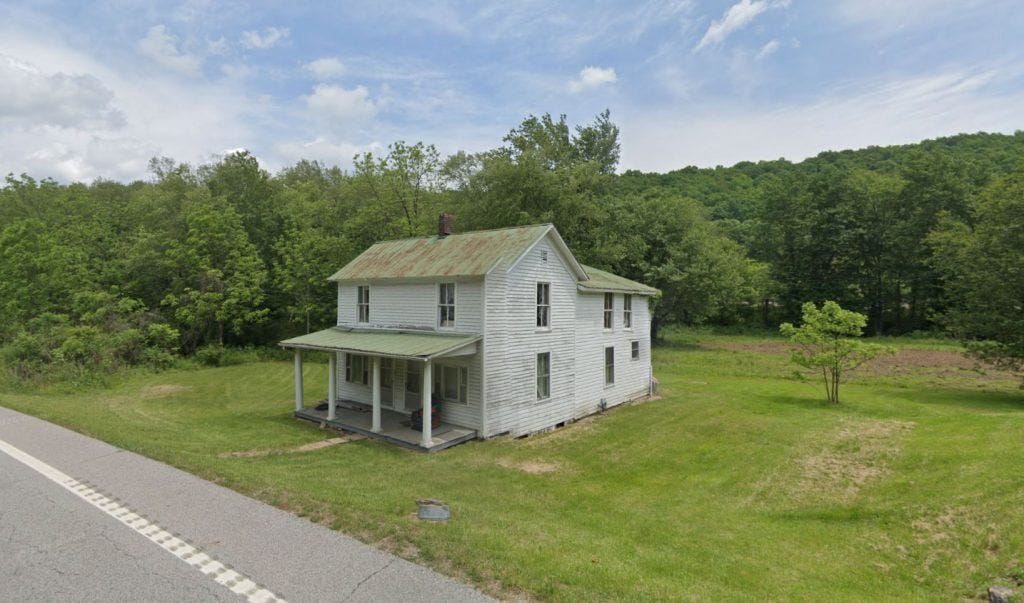
Most of original Glenmary is gone. The area north of town that was known as Todd’s Bottom — where a great spectacle was created when a plane landed there in the 1920s — is still cleared farmland, though much of it has been purchased by the State of Tennessee and will be used for wetland mitigation. The old Kline farm on Nydeck, which was originally owned by the Redmans and then the Pembertons, is still cleared farmland, as well.
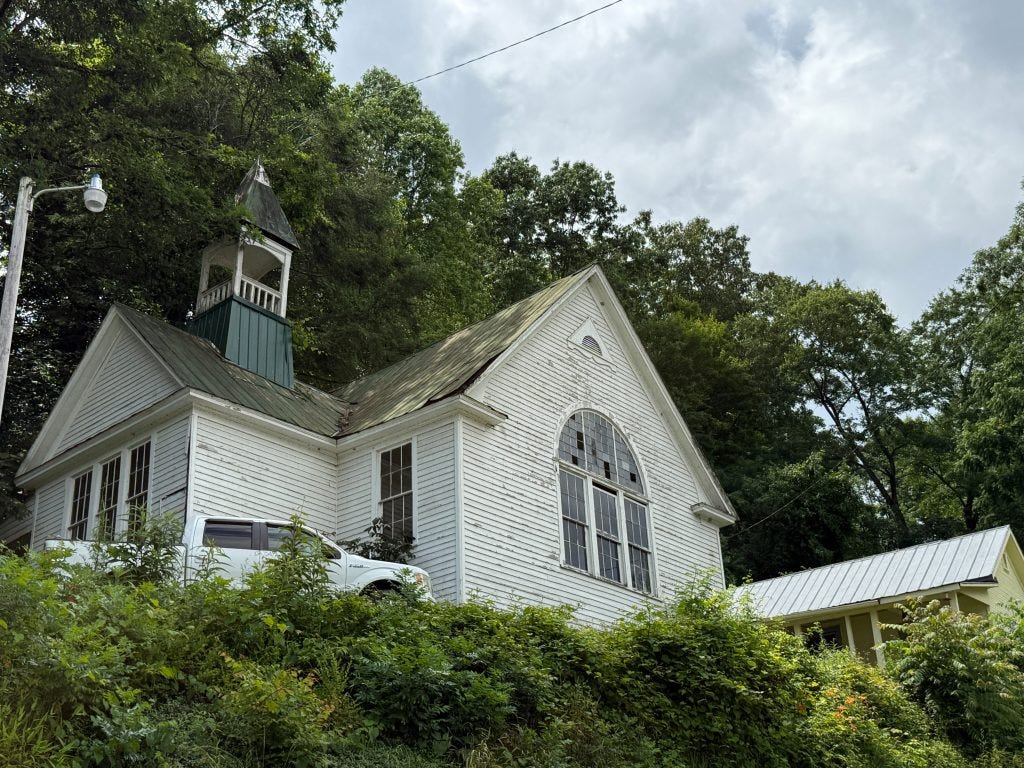
Two church buildings still stand at the base of Red Hill — the Glenmary Baptist Church along the highway, and the old congregational church on the hill behind it. The former was built in the 1930s on property purchased from Gatewood Pemberton, where the lumber company barn once stood. The latter was built in 1907 as the Presbyterian church, on property donated by Lindsey Redman. It became the congregational church in 1929.
At the top of the hill, the former Glenmary School site is today the Glenmary School Park, a well-maintained picnic area owned by Roger Russell and Dale Webb.
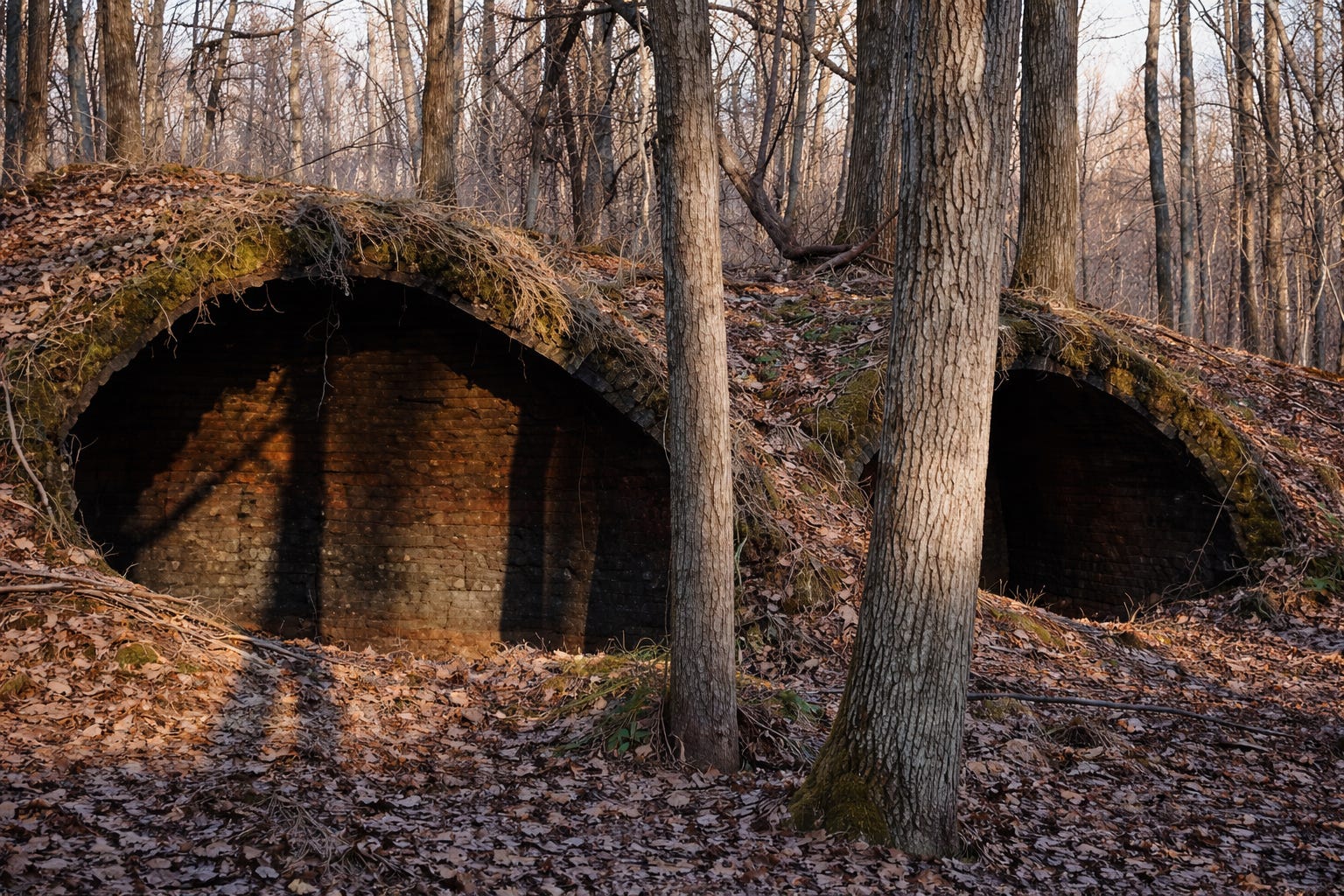
The old side rail along Davis Creek to Coal Hill can still be traced. A short section of it is Coal Hill Road near the old Glenmary depot, then the remainder of it is Goose Creek Private Run, a private drive. The old coke ovens are still there, as well.
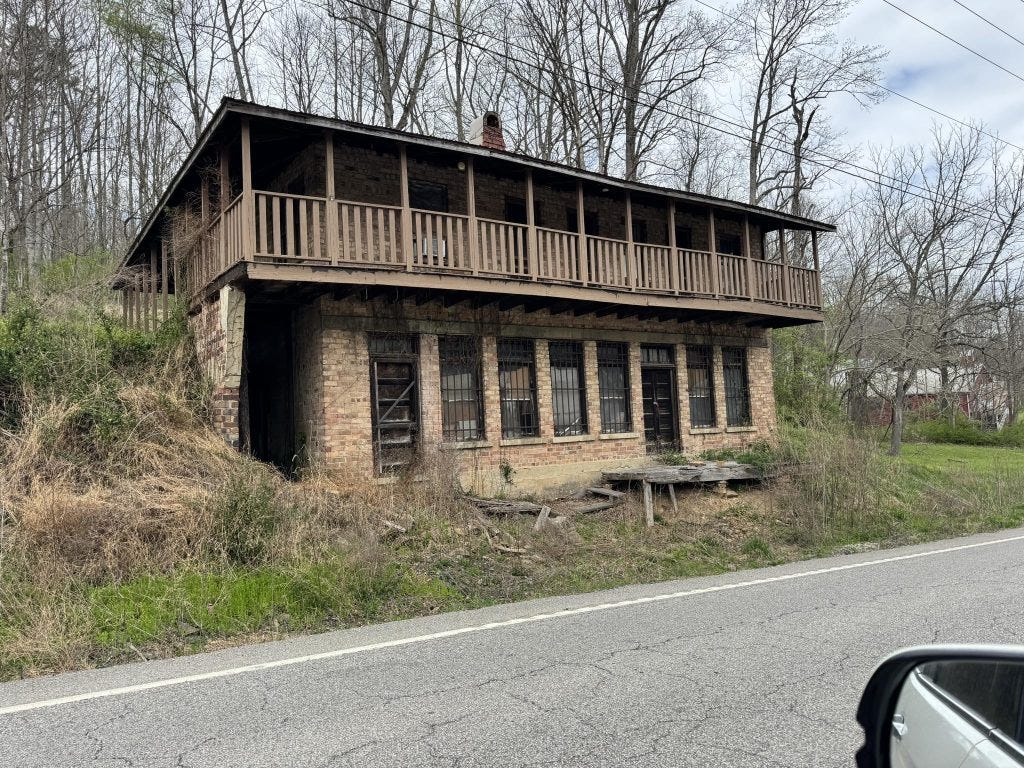
Besides the two churches, the only remaining buildings from old Glenmary are the homes in the immediate vicinity of the churches. One is the two-story, white home along U.S. Highway 27 that was built in 1905. Across the road are homes built in 1900 and 1915. Finally, is the two-story brick structure on the highway at the Coal Hill Road intersection that was built in 1931.
The brick structure was built in 1931 by George Watts. This building housed a general store and the Glenmary Post Office on the first floor, while the second floor provided living quarters for the Watts family.
George Renaugh Watts (1882-1958) was the son of Daniel “Renaugh” Watts and Cynthia Freeland. The Watts family moved to Morgan County from Georgia with George’s grandfather, Joseph Watts (1805-1871), after the Civil War. Renaugh, the youngest of eight children, and his wife, Cynthia, purchased 170 acres in the Glenmary area in 1887 and moved there. They had seven children, the youngest of whom was George Renaugh Watts. He married Florence Walker, the daughter of Joe Walker and Almira Robbins of Glenmary, and their only surviving son was Wilbur Watts, the longtime Plateau Electric Cooperative board member who died last year. Wilbur’s children were educators Garry Watts and Janet Shoemaker, who own the nearby homes that were built in 1900, 1905, and 1915.
Together, these buildings and the churches beside them are all that remains of old Glenmary.
Thank you for reading. Our next newsletter will be Threads of Life tomorrow. If you’d like to update your subscription to add or subtract any of our newsletters, do so here. If you haven’t yet subscribed, it’s as simple as adding your email address!
◼️ About the IH • IH Sports Network • The Encyclopedia of Scott County
◼️ Subscribe • Sponsor • Manage Your Account
◼️ Follow us on Facebook, Instagram, X/Twitter, YouTube
Our Newsletters:
• Monday morning: The Daybreaker (news & the week ahead)
• Tuesday: Echoes from the Past (stories of our history)
• Wednesday: Threads of Life (obituaries)
• Thursday evening: The Weekender (news & the weekend)
• Friday: Friday Features (beyond the news)
• Sunday: Varsity (a weekly sports recap)