

The tragedy of the Jerome Boyatt saga
What started as a confrontation over bootleg liquor at a remote logging camp turned into a quest for vengeance that left a total of five people dead


You’re reading Friday Features, a weekly newsletter containing the Independent Herald’s feature stories — that is, stories that aren’t necessarily straight news but that provide an insightful look at our community and its people. If you’d like to adjust your subscription to include (or exclude) any of our newsletters, do so here. If you haven’t subscribed, please consider doing so!
Today’s newsletter is sponsored by First National Bank. Since 1904, First National Bank has been a part of Scott County. First National is local people — just like you. Visit fnboneida.com or call (423) 569-8586.

The tragedy of the Jerome Boyatt saga
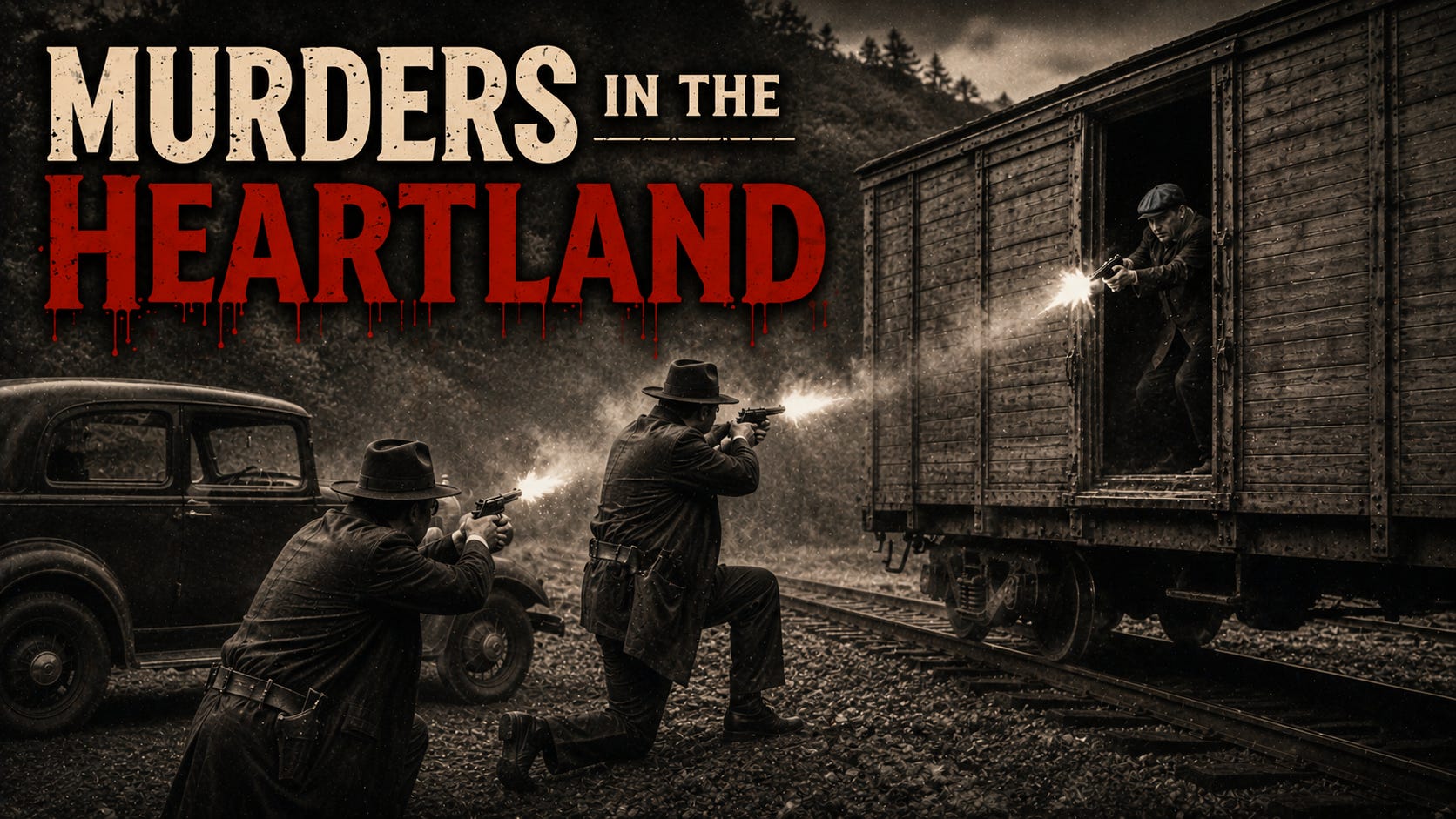
It started with a fistfight — a struggle over the sale of illicit liquor. It ended with five bodies, a shattered community, and a question that’s never been answered: Who really fired the first shot?
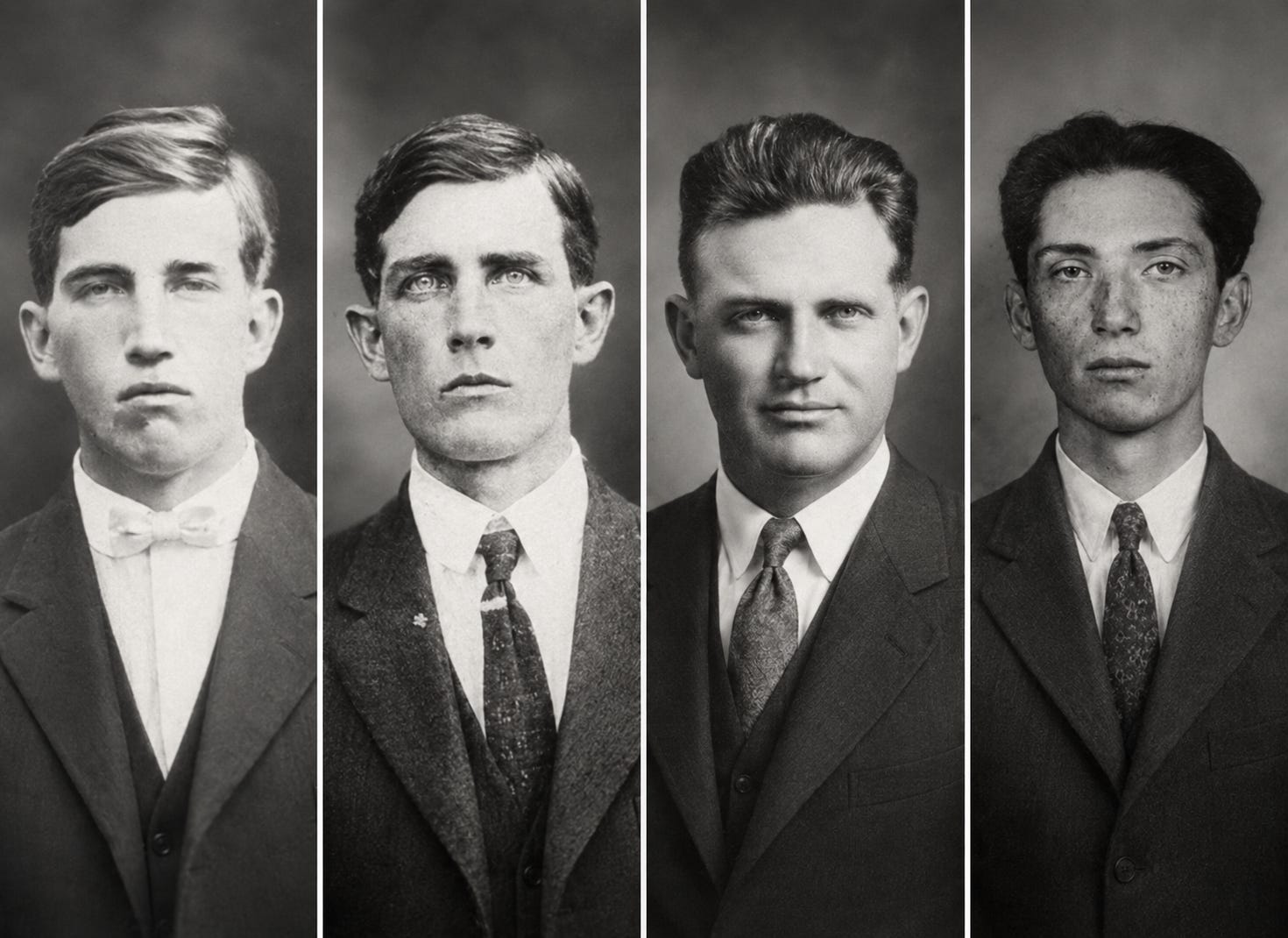
In the Spring of 1933, the rugged hills along the Scott-Pickett county line erupted in bloodshed that still haunts people who trace their lineage back to No Business Creek. By the time the smoke cleared, a father and son from one of Pickett County’s most respectable families lay dead. So did a moonshiner, his father, and a teenage boy caught in the crossfire.
The newspapers called it justice. The mountains called it murder.
What happened in that boxcar on Rock Creek has been told a hundred different ways, but none of them ended with a trial. There were no convictions, no apologies. Only the cold truth: five men went into the ground, and not a single man answered for it. Ninety-two years have passed and still the truth proves elusive. Most of those who knew what really happened are dead. The rest — their children, grandchildren, and neighbors — have only pieces of the story, handed down in hushes and warnings.
This is the story of one of the most brutal and infamous lynchings in Scott County history — and the violence that led to it.
***
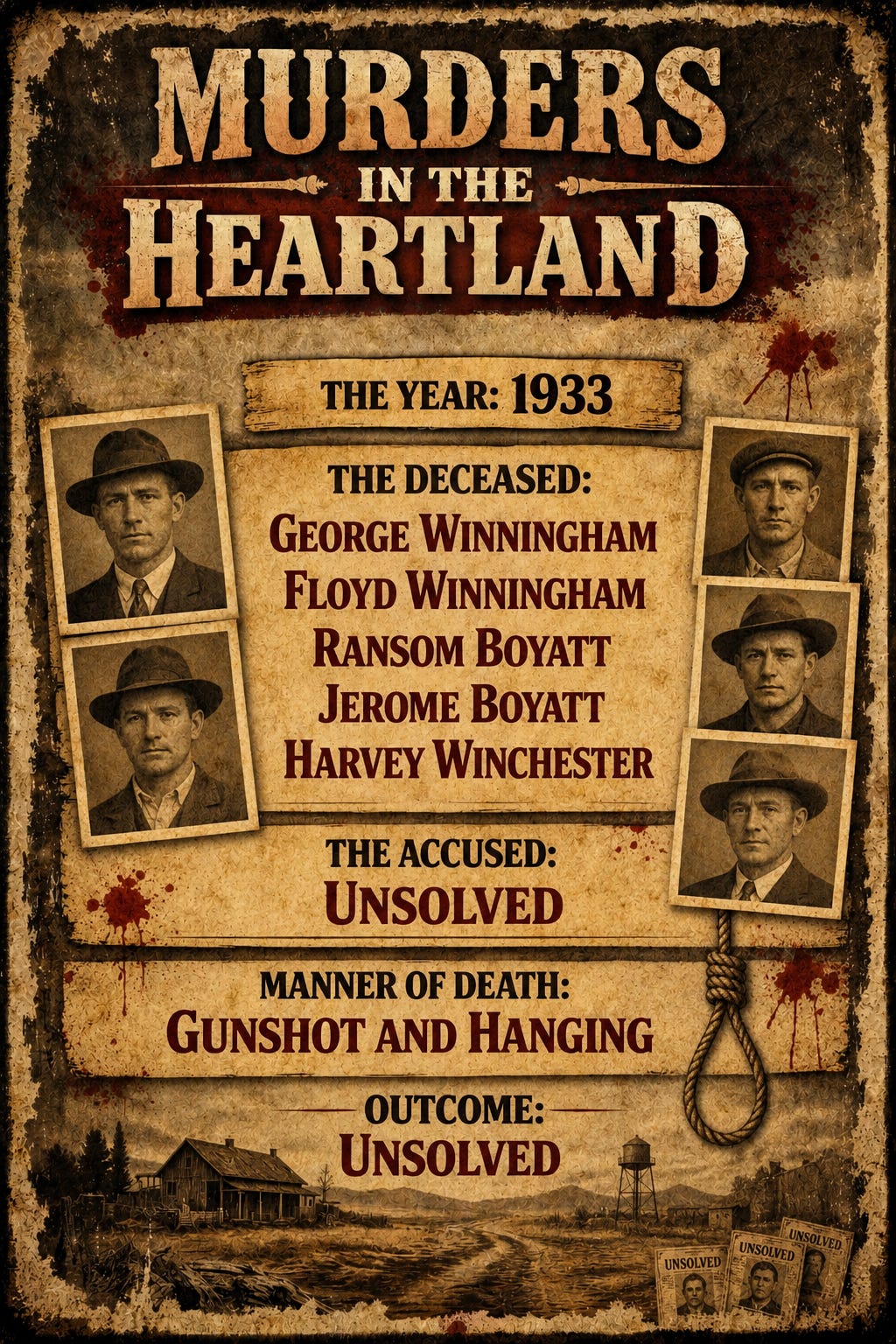
Jerome Boyatt wasn’t born to be notorious. But by 22, he already had a reputation.
The second-oldest of seven children, he was raised on a hardscrabble farm near the headwaters of No Business Creek — a remote, cliff-lined gorge cut off from the outside world by bad roads and worse terrain. His father, Ransom Boyatt, worked the land with bare hands and grit. His mother, Poppie Litton Boyatt, came from a long line of Appalachian settlers who had buried more children than they’d raised.
The Boyatts lived by their own code. And in those hills, moonshine wasn’t a crime — it was currency.
Jerome knew how to fight. He knew how to run. And, as the law would learn, he knew how to shoot.
***
Sixty miles west, in the tidy town of Byrdstown, Sheriff George Winningham sat at the head of a very different family. At 62, he was a fixture in Pickett County — four times elected, respected by preachers and feared by bootleggers.
His son, Deputy Floyd Winningham, was following in his father’s footsteps: sharp-eyed, proud, and quick on the draw.
The Winninghams came from lawmen and Union scouts. George’s wife Martha was the daughter of Asa Smith, a Civil War veteran who survived a Confederate hit squad that murdered his father and brother. That kind of legacy doesn’t go away.
Neither does a vendetta.
***
It began at Rock Creek, a coal camp run by the Stearns Coal & Lumber Company. Jerome Boyatt had ridden the train there that morning with his deaf-mute brother, Eugene, and three friends: Walter and Charlie Crabtree, and Lige Terry. Word was he brought liquor with him.
Then he ran into his uncle — Albert Boyatt.
Nobody knows what sparked the fight. Maybe Albert was selling bootleg in Jerome’s territory. Or maybe it was the other way around. Either way, fists flew, and Albert came out the worse for wear.
The camp superintendent, fearing more violence, herded all five men into a boxcar and phoned the sheriff. But when he called, he didn’t report a fistfight.
He claimed there’d been a murder.
***
Maybe things would’ve been different if Sheriff Winningham had known the truth — that they were headed to Rock Creek to break up a fight between family members. Instead, he and his deputies thought they were going to a fight that had turned deadly. In any event, George left his dinner table and rode out with Deputy Floyd and another officer, Bram Garrett. What happened next is where the story splits.
The official story — what made the front page of The Tennessean — claimed that when the sheriff opened the boxcar door and opened the men out, Jerome raised a .45 and fired.
But the men inside — and witnesses outside — told it differently.
They said Floyd Winningham fired first. Maybe a warning shot into the air. Maybe into the car itself. Maybe he was drunk.
What’s certain is that Eugene, unable to hear and panicked, screamed and fell back. Believing his brother had been shot, Jerome drew his pistol and fired.
Floyd took two rounds to the face. Dead before he hit the ground. Sheriff Winningham fired back and was hit twice in the gut.
As the old lawman collapsed, Jerome fled into the woods. The others were arrested on the spot.
The sheriff died the next night. The Winninghams were gone. Well, most of them. One very determined member of the family remained. And that’s where things started to get really ugly.
***
What followed was less investigation than crusade.
A reward fund was established. A posse of more than one hundred men — led by George Winningham’s surviving son, Sheriff Willie Winningham of Kentucky — descended on No Business like an occupying army.
And they weren’t looking to arrest Jerome. They were looking to bury him.
They tore through the creek, rounding up everyone named Boyatt. Ranse and Poppie were taken. So were their four daughters — Lola, Violet, Bonnie and little Dulcie, just eight years old. Even today, those descended from families that were close to the Boyatts grit their teeth in anger over the way it all played out.
But Jerome? He vanished.
He knew the cliffs, the caves, the game trails. He found refuge with people like Will and Maude Burke, with people like Dewey Burke, with anyone who knew what happened in that boxcar and believed a man had a right to defend his kin.
He never fired another shot.
But blood was still coming.
***
After several weeks, Ranse Boyatt was released from jail. The newspapers said he’d agreed to talk Jerome into surrendering.
Instead, he was found dead.
Concerned neighbors entered the Boyatt home to find Ranse’s body lying on a bed, badly decomposed. Some said he’d been hanged in the barn and then laid in the bed to rot. Others were less sure. An autopsy was inconclusive. And, for the record, the door was locked from the inside.
There was no investigation. Just another dead Boyatt.
And still, no Jerome.
***
Poppie Boyatt begged neighbors hot to tell Jerome what had happened to his father. She knew what he’d do. And what would happen to him. But someone figured he needed to know the truth. And what happened next was exactly what Poppie had feared.
Fearful for his mother and his sisters, Jerome met a Scott County lawman near the Black Oak community west of Oneida. He was taken to the Scott County Jail in Huntsville.
He wouldn’t last a week.
***
The mob came with masks.
Twenty-five men stormed the jail, beat the jailer, and dragged two prisoners from their cells: Jerome Boyatt and 19-year-old Harvey Winchester — a kid awaiting trial for a separate killing.
They were taken into the woods outside Helenwood.
Harvey was found first. Rope around his neck. Bullet in his chest.
Jerome’s body was found hundreds of yards away. Naked. Shot twice in the back. Once in the head.
Executed.
Those who saw the scene said both men had been tortured. It appeared that Jerome had been turned loose to be gunned like a rabbit.
But who pulled the trigger?
Suspicion fell on Sheriff Willie Winningham. He was never formally charged. But the next day, one of his deputies died from a gunshot wound. The official story — the one Willie told — was that his deputy dropped the gun and it went off. But the bullet didn’t match the dead lawman’s weapon.
Did Jerome or Harvey somehow get ahold of a gun during the melee in Helenwood? Did the Kentucky lawman wind up in a crossfire as bullets were rained down on Jerome?
No one knew for sure. Chances are, no one ever will.
***
Six days after the lynching, the men from the boxcar — Eugene Boyatt and the others — were released. A Pickett County grand jury found no cause for further prosecution.
Martha Winningham was named sheriff of Pickett County, replacing her husband.
Sheriff Willie Winningham died the following month in a shootout across the state line in Kentucky.
Jerome Boyatt was buried at Foster Crossroads. His mother remarried and lived another forty-five years. His sisters scattered, some to Ohio.
Harvey Winchester was buried quietly in Pine Knot, Ky. His family, too, left behind a trail of silence.
***
It was a day that forever changed No Business. It was a day that forever changed Byrdstown. Five men died in the wake of a fistfight. Some called it justice. Others called it murder. They’re still disagreeing on it today, and who calls it what depends on whether you’re asking in Scott County or Pickett County.
But one overriding truth remains: Nobody ever answered for the deaths of Jerome and Ranse Boyatt.
And the law never came back to that gorge the same way again.
Thank you for reading. Our next newsletter will be The Daybreaker bright and early Monday morning. If you’d like to update your subscription to add or subtract any of our newsletters, do so here. If you haven’t yet subscribed, it’s as simple as adding your email address!
◼️ About the IH • IH Sports Network • The Encyclopedia of Scott County
◼️ Subscribe • Sponsor • Manage Your Account
◼️ Follow us on Facebook, Instagram, X/Twitter, YouTube
Our Newsletters:
• Monday morning: The Daybreaker (news & the week ahead)
• Tuesday: Echoes from the Past (stories of our history)
• Wednesday: Threads of Life (obituaries)
• Thursday evening: The Weekender (news & the weekend)
• Friday: Friday Features (beyond the news)
• Sunday: Varsity (a weekly sports recap)